
My First Steps with German: Soup Kitchen and Food Banks
It’s been six months since I moved to Berlin, and let me tell you, learning German has been… intense. But also, incredibly rewarding. It’s not just about memorizing words; it’s about actually using them, and that’s where the real learning happens.
I’m currently living in a shared flat near Prenzlauer Berg, and it’s a whirlwind of new experiences, which is fantastic, but my German is definitely still a work in progress. The other day, I met up with Alice, a local who’s been encouraging me to get more involved. It started with a simple greeting – “Hallo! Wie geht’s dir?” (Hello! How are you?). She replied, “Hallo Alice! Mir geht’s gut, danke. Und dir? Mir auch gut, danke.” (Hello Alice! I’m doing well, thanks. And you? I’m also doing well, thanks.) It felt surprisingly natural, and I managed a “Mir auch gut, danke.” back.
My Introduction to the Suppenküche
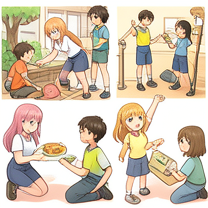
That’s when Alice told me she’d signed up at the Suppenküche (soup kitchen). “Das ist toll!” (That’s great!) I exclaimed, genuinely pleased for her. She explained she was helping to cook soup and wash dishes – “Ich habe geholfen, Suppe zu kochen und das Geschirr zu spülen.” – because there were so many people in need. “Weil es sehr viele Bedürftige gibt, ist die Arbeit sehr viel.” (Because there are so many people in need, the work is very busy.) It made me realize how important this kind of work is.
Thinking About Helping – And The Tafel
After our chat, I started thinking about ways I could contribute. I’d been wanting to do something meaningful, and this seemed perfect. I mentioned to Alice that I’d been considering helping at the Tafel (food bank). “Weil ich gerne Lebensmittel retten möchte.” (Because I want to save food). The Tafel is amazing; they collect food that supermarkets would otherwise throw away – “Die Tafel ist auch sehr wichtig. Weil sie viel Essen wegschickt, das sonst komisch verwurst wäre.” (The Tafel is also very important. Because they send away a lot of food that would otherwise be wasted.) It’s a brilliant system. She nodded in agreement, “Ja, das stimmt.” (Yes, that’s true).
A Potential Collaboration
Then, we started talking about getting involved together. “Vielleicht könnten wir uns mal zusammen engagieren? Das wäre schön!” (Maybe we could get involved together? That would be lovely!) Alice suggested, “Vielleicht nächste Woche?” (Maybe next week?). “Klar, das mache ich gerne!” (Of course, I’d be happy to!).
Small Mistakes, Big Learning
Honestly, the biggest hurdle right now is the pronunciation. I keep stumbling over words like “wurst” (sausage – it’s a common word, surprisingly!). I accidentally said it the wrong way once and Alice quickly corrected me with a smile. “Nicht ‘wurst’, sondern ‘waste’!” (Not ‘wurst’, but ‘waste’!) It was a funny, slightly embarrassing moment, but it also showed me she was patient and willing to help me.
Key Phrases You Need to Know
Here are a few key phrases I’ve found most useful so far:
- Hallo! (Hello!) – A basic but essential greeting.
- Wie geht’s dir? (How are you?) – A common way to start a conversation.
- Mir geht’s gut, danke. (I’m doing well, thanks.) – Your standard response.
- Und dir? (And you?) – To reciprocate the question.
- Ich habe… gemeldet. (I’ve signed up for…) – Useful for registering for activities.
- Das ist toll! (That’s great!) – Expressing enthusiasm.
- Weil… ist… (Because… is…) – A fundamental sentence structure for explaining reasons.
Next Steps
I’m planning to contact the Suppenküche and Tafel to see how I can volunteer. I’m also going to keep practicing my German with Alice – maybe we can even cook soup together next time! This whole experience is already pushing me outside my comfort zone, and I’m realizing that learning a language isn’t just about grammar; it’s about building connections and immersing yourself in a new culture. It’s a challenge, for sure, but a really rewarding one. “Los geht’s!” (Let’s go!)

Leave a Reply