
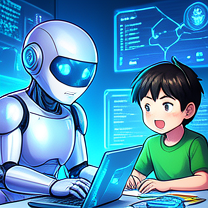
My Struggle with “Warum” – And Why These Bots Mess Up
Okay, so here I am in Berlin. It’s amazing, really it is! The food is incredible, the people are generally friendly (though sometimes a little direkt – direct!), and I’m finally getting my head around working as a translator at a small company specializing in technical documents. But learning German – richtig German – is proving to be way harder than anyone told me it would be. And part of that struggle? Trying to explain why these computers sometimes just… get things wrong. Especially when I’m trying to write formal emails, like for TELC certification prep.
The “Warum” Problem (and My Frustration)
I spent ages last week writing an email to Herr Schmidt at the firm about a potential new client. It was pretty straightforward – explaining why we thought his company, “Müller Maschinenbau,” might be interested in our services. I used all the phrases I’d been practicing: “Wir glauben…” (We believe…), “Es könnte für Sie von Vorteil sein…” (It could be advantageous for you…), and even a polite request for a meeting – “Gerne würden wir uns mit Ihnen treffen.” (Genuinely, we would like to meet with you.)
I sent it off, feeling pretty confident. Then, this morning, Herr Schmidt replied, completely rejecting my suggestion. He said, in very precise German, “Ich finde Ihre Analyse nicht nachvollziehbar.” (I find your analysis not understandable). And then added a detail completely missing from my original email: he wanted a proposal specifically for their Neue (new) line of industrial pumps!
It was so frustrating! I felt like such an idiot. The worst part was, I’d used all the right vocabulary. I thought I’d covered everything. But clearly, something had gone wrong. I started thinking about these “Assistenzprogramme” – help programs – that everyone talks about. They seem to be everywhere now, even helping with emails!
AI Doesn’t Understand Context Like We Do
Let me tell you, I spent the rest of the day obsessing over this email and figuring out warum (why) it went so wrong. And I started thinking about these… digital helpers. They can write amazing-sounding sentences, right? But they don’t really understand what we mean. It’s not like they are thinking, “Okay, Herr Schmidt is a serious industrial engineer; he needs precise and detailed information.”
My colleague, Thomas – a very patient man – explained it to me. He said, “Du musst verstehen, das System ist nur gut darin, Wörter zu verbinden. Es hat kein Verständnis für den Kontext.” (You need to understand, the system is only good at connecting words. It has no understanding of context.)
He used an example: I asked him to write a simple sentence for me – “Die Katze sitzt auf dem Tisch.” (The cat sits on the table). He churned out perfectly correct German! But then I added, “Die Katze sitzt auf dem Tisch, während ich Kaffee trinke.” (The cat is sitting on the table while I drink coffee.) Suddenly, he gave me a completely irrelevant response about cleaning up spilled milk. See? It just couldn’t grasp the extra information and create a sensible continuation!
Real-World Examples – And My Mistakes
It’s not just emails. I was talking to my Oma (grandmother) on the phone last week, trying to explain something about the train schedules. I used the phrase “Der Zug fährt um…” (The train leaves at…). She immediately asked me, in a very confused way, “Aber wann genau?” (But exactly when?).
It dawned on me – I hadn’t specified when precisely! The computer, or rather, my brain trying to sound like a computer, had missed the vital detail of the time. This happened again with a simple request at a bakery: “Ich hätte gerne einen Brot.” (I would like one bread). It was then explained to me that in Berlin, you need to specify welche (which) type of bread you want – “Ich hätte gerne ein Roggenbrot” (I’d like a rye bread).
These little mistakes highlight something important: AI systems rely on patterns and data. They don’t have lived experience, common sense or the ability to interpret unspoken intentions. It is a big difference!
Preparing for TELC – Focusing on Clarity
So, back to my TELC prep… I’m realising that the exam isn’t just about knowing the right grammar rules and vocabulary. It’s also about being able to communicate clearly, accurately and understandably – just like a human would. I need to focus on crafting emails with all the necessary details, avoiding jargon (unless it’s absolutely crucial) and anticipating what information the recipient might need.
And I definitely need to be wary of over-reliance on any “digital assistant” – especially when trying to explain complex things! “Warum” is a big question in Germany, and understanding why these systems sometimes fail to answer it properly is key to my success (and maybe a little bit less frustration!).
I’m going to start by practicing writing explanations of everyday situations – like ordering coffee or asking for directions – and then checking them with someone who speaks German fluently. It’s the best way to make sure I’m not missing any crucial context!


Leave a Reply