
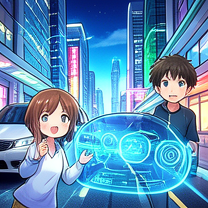
My Struggle with German and Self-Driving Cars: A TELC B1.2 Writing Challenge
Okay, deep breath. I’ve been living in Berlin for just over a year now – a fantastic city, truly, but learning German has been… well, let’s just say it’s been a rollercoaster. My main goal is to pass the TELC B1.2 writing exam, specifically the task about discussing self-driving cars. It feels ridiculously specific, doesn’t it? But honestly, tackling this topic felt like a good way to actually practice using my German in a way that matters – not just ordering coffee or asking for directions (though I still manage those spectacularly!).
The Task: “Die Zukunft der Autos”
The prompt asks me to discuss self-driving cars and give my opinion. Simple enough, right? I knew the vocabulary needed – Autonomer Fahren, Selbstfahrendes Auto, KI (Artificial Intelligence), Sicherheitsbedenken (safety concerns). I’d even managed a reasonably decent conversation with my colleague, Thomas, about it at work. But putting it all down on paper… or rather, onto the computer screen in German… is a completely different beast.
First Attempts – And the Confusion!
My first attempt was… a mess. I started talking way too much about how amazing technology is generally, without actually sticking to the topic of self-driving cars. I used phrases like “Es ist ja total super!” (It’s totally great!), which felt completely inappropriate and overly enthusiastic when discussing potential problems.
Then there was this little disaster: I asked my Oma (grandmother) for help translating “sensor” into German. She told me it was “ein Sensor für den Regen” – a sensor for the rain! I nearly burst out laughing, but quickly realized I needed to be more specific. My German isn’t perfectly polished yet, and sometimes these little misunderstandings completely throw me off.
A Real Conversation – And Some Helpful Corrections
Yesterday, I was at the Eiscafé (ice cream café) near my apartment, trying to chat with the barista, Lena. I wanted to practice formulating my opinion on the ethics of self-driving cars.
- Me: “Entschuldigung, ich möchte mit Ihnen über selbstfahrende Autos sprechen. Ich finde es interessant, aber ich habe auch ein paar Bedenken.” (Excuse me, I would like to talk with you about self-driving cars. I find it interesting, but I also have some concerns.)
- Lena: “Ja, natürlich! Was genau macht Ihnen Sorgen? Es ist eine schwierige Frage!” (Yes, of course! What exactly worries you? It’s a difficult question!)
I started to explain that while I was excited about the potential for increased safety – “Ich denke, es könnte die Verkehrssicherheit verbessern” (I think it could improve traffic safety) – I was worried about job losses for truck drivers and the ethical dilemmas of who is responsible if something goes wrong.
- Lena: “Das stimmt! Die Frage der Verantwortung ist sehr wichtig. Wenn ein autonomes Auto einen Unfall verursacht, wer trägt die Schuld? Der Fahrer? Das Unternehmen? Die KI?” (That’s true! The question of responsibility is very important. If an autonomous car causes an accident, who is responsible? The driver? The company? The AI?)
I completely blanked on the right word for “liability” – Haftung – and just said “Die Verantwortung ist kompliziert!” (Responsibility is complicated!). Lena patiently corrected me: “Nein, es ist Haftung. Die Haftung muss geklärt werden.” (No, it’s liability. The liability must be clarified.)
Useful Vocabulary and Phrases
Here are some phrases I’m actually finding useful for this task:
- “Ich bin skeptisch gegenüber…” (I am skeptical about…) – Great for expressing concerns.
- “Es stellt sich die Frage, ob…” (The question is whether…) – Useful for introducing a debate.
- “Eine große Herausforderung ist…” (A major challenge is…) – Good for outlining problems.
- “Wenn etwas schief geht…” (“If something goes wrong…”) – Perfect for discussing potential risks.
Moving Forward: Focus and Practice
I’m realizing that just knowing the words isn’t enough. I need to practice structuring my arguments in German, rather than translating from English directly. I’ve started writing out different paragraphs about the advantages and disadvantages of self-driving cars – focusing on real examples I could imagine seeing in Germany. For example: “Stellen Sie sich vor, ein selbstfahrendes Auto fährt einen älteren Herrn über die Straße, weil es das rote Licht nicht erkannt hat.” (Imagine a self-driving car runs an elderly man over because it didn’t recognize the red light.) – It sounds dramatic, but it’s a practical illustration of a potential problem.
I also plan to keep having conversations with people like Lena and Thomas – even if they correct my mistakes! It feels less intimidating than staring at a blank page. I think this TELC B1.2 writing task is forcing me to truly engage with my German, and that’s a pretty good feeling. Jetzt muss ich weiter üben! (Now I need to keep practicing!)


Leave a Reply