
My First Time at the Arzt – Getting Used to the German Healthcare System
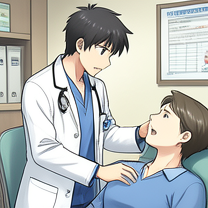
Okay, so here I am, six months in Berlin, and things are… well, they’re definitely different. I’ve learned a lot about the culture, the food (a lot of Bratwurst, honestly!), but navigating the healthcare system has been a bit of a challenge. It’s not just about understanding what they’re saying, it’s about understanding how they’re saying it, and the unspoken expectations. Today, I want to talk about that first experience – going to the doctor, specifically the kind you see in that TELC B1.1 Bildbeschreibung picture: a doctor examining a patient. It was… intense.
The Appointment – “Ich habe einen Termin?”
I’d been feeling a bit run down for a couple of weeks, a persistent cough and just generally tired. I knew I needed to see a Hausarzt – a general practitioner. The first step was to call. I spoke to a woman named Frau Schmidt, and the conversation went something like this:
Me: “Guten Tag, ich möchte einen Termin vereinbaren.” (Good day, I’d like to book an appointment.)
Frau Schmidt: “Was ist der Grund Ihrer Besuchs?” (What is the reason for your visit?)
Me: “Ich habe eine Erkältung und bin müde.” (I have a cold and I’m tired.)
Frau Schmidt: “Moment bitte. Ich schaue nach.” (Just a moment, please. I’ll check.)
…(pause) … “Wir haben einen Termin frei am Donnerstag um 10 Uhr.” (We have an appointment available on Thursday at 10 am.)
Me: “Das passt mir gut.” (That suits me well.)
It felt so formal, just stating the problem directly. Back home, I might have been more descriptive. I quickly learned that in Germany, they want to know exactly what’s wrong.
The Examination Room – “Wie geht es Ihnen?”
Walking into the Praxis (practice) was a little overwhelming. There were waiting room chairs, magazines (mostly in German – a struggle!), and a distinct smell of disinfectant. A nurse, a young man named David, asked me, “Wie geht es Ihnen?” (How are you?). I just stammered, “Mir geht es nicht so gut.” (I’m not feeling so good.) I felt a bit embarrassed. David then asked me some questions about my symptoms, and I struggled to answer clearly.
“Wo genau tut es weh?” (Where does it hurt exactly?)
“Im Hals, irgendwie.” (In my throat, sort of.) – I immediately regretted saying “irgendwie.” It sounded so vague! David smiled and said, “Verstehe. Und haben Sie Fieber?” (Understand. And do you have a fever?)
The Doctor – “Was können Sie tun?”
Finally, Dr. Müller, a very serious-looking man, came in. He examined me thoroughly, listening to my lungs with a stethoscope. He asked a lot of questions, again very direct. He spent a lot of time listening to me, which I appreciated. Then, he said, “Ich verschreibe Ihnen ein Hustenzäpfchen und eine Tablette.” (I’m prescribing you cough drops and a tablet.) He explained the dosage clearly. “Nehmen Sie die Hustenzäpfchen drei Mal täglich nach dem Essen.” (Take the cough drops three times a day after meals.)
I asked, “Ist das schlimm?” (Is this bad?) – I just wanted to make sure! He chuckled and said, “Nein, nein, das ist harmlos.” (No, no, it’s harmless.)
A Small Misunderstanding – “Ich brauche eine Überweisung!”
The most confusing part was when Dr. Müller said, “Sie müssen eine Überweisung von Ihrem Hausarzt bekommen.” (You need a referral from your general practitioner.) I was completely lost! I’d been told initially that I could just book a regular appointment. I explained my confusion, and he patiently explained that in Germany, you usually need a referral for further specialist appointments. It was a huge difference from my experience at home. I felt a bit panicked, but it’s good to know now!
Key Phrases and Vocabulary
Here’s a little recap of what I learned:
- Arzt: Doctor (male)
- Ärztin: Doctor (female)
- Hausarzt: General Practitioner
- Termin vereinbaren: To book an appointment
- Ich habe eine Erkältung: I have a cold
- Wie geht es Ihnen?: How are you? (formal)
- Mir geht es nicht so gut: I’m not feeling so good
- Was können Sie tun?: What can you do?
- Überweisung: Referral
Moving Forward – Learning and Adapting
Honestly, the whole experience was a little stressful, but it was also a really valuable lesson. I realized that communication in Germany is often very direct, and it’s important to be clear and concise. I’m also learning to anticipate the need for referrals – it’s a fundamental part of the system. I’m slowly getting more comfortable with the language and the expectations, and I’m starting to feel more confident navigating the German healthcare system. It’s still a learning curve, but at least I know a little more now! Next time, I’m going to practice saying “Ich brauche Hilfe!” (I need help!) just in case.


Leave a Reply