
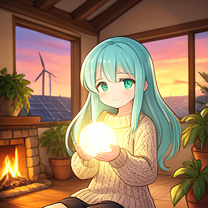
My Journey into “Grünes Denken” – Talking About Sustainability in Germany
It’s been six months since I moved to Berlin, and let me tell you, life is… intense. The pace is different, the bureaucracy is legendary, and the language… well, the language is a beautiful beast. But honestly, one of the best things about being here is the genuinely deep conversation people have about sustainability. It’s not just a buzzword; it’s woven into the fabric of daily life. And I’m learning, slowly but surely, how to actually talk about it.
First Impressions: The Kaffeehaus Conversation
My first real crack at the subject came in a small Kaffeehaus in Prenzlauer Berg. I was nursing a Kaffee mit Milch (coffee with milk) and trying to decipher the newspaper when a man sitting opposite me started discussing the latest solar panel installation in his building.
“Das ist doch super, oder? Die neuen Panels sind sehr effizient.” (That’s great, isn’t it? The new panels are very efficient.) he said, gesturing towards the window.
I wanted to jump in, to say something intelligent, but I just mumbled, “Ja, sehr gut.” (Yes, very good.) which, looking back, felt incredibly awkward. I realized I needed a basic vocabulary. My German teacher told me erneuerbare Energien (renewable energies) was key. I started learning words like Solaranlage (solar system), Windkraft (wind power), erneuerbar (renewable), nachhaltig (sustainable), and Umweltfreundlich (environmentally friendly).
Ordering a “Grünes” Meal
The next hurdle was understanding the concepts when ordering food. I was in a vegan restaurant near Friedrichshain and was trying to be polite and make a good impression. The waiter, a young woman named Sarah, asked, “Was darf ich Ihnen bringen?” (What would you like to have?).
I wanted to say I’d like something nachhaltig sourced, but panicked and just blurted out, “Ich möchte ein Gericht mit Gemüse.” (I’d like a dish with vegetables.)
Sarah smiled patiently and said, “Wissen Sie, wir benutzen hauptsächlich Bio-Gemüse aus der Region. Das ist sehr wichtig für uns.” (Do you know, we mostly use organic vegetables from the region. That’s very important to us.) I realized I needed to be more specific. I started using phrases like “Ich möchte etwas, das umweltfreundlich ist” (I’d like something that is environmentally friendly) – which she understood perfectly. It highlighted the importance of using regional ingredients – Regionale Produkte – which was a common theme I noticed.
Misunderstandings and Corrections – “Das ist doch viel!”
A few weeks later, I was talking to my neighbour, Herr Schmidt, about his energy consumption. I was trying to explain that I was trying to reduce my Stromverbrauch (electricity consumption) and mentioned I’d installed a smart meter.
“Ein Smartmeter? Das ist doch viel Aufwand!” (A smart meter? That’s a lot of effort!) he exclaimed.
I felt my face flush. I realized I’d inadvertently conveyed that I was obsessed with measuring everything. I quickly corrected myself, explaining, “Nein, nein, es ist nur, um zu sehen, wie viel ich verbrauche, und dann kann ich versuchen, es zu reduzieren.” (No, no, it’s just to see how much I use, and then I can try to reduce it.) He laughed and said, “Gut, gut. Das ist eine gute Idee.” (Good, good. That’s a good idea.)
Key Phrases and Vocabulary
Here’s a little cheat sheet of phrases I’ve found really helpful:
- Der Energieverbrauch – Electricity consumption
- Die Energieeffizienz – Energy efficiency
- Grüne Energie – Green energy
- Umweltbewusst – Environmentally conscious
- Den Umweltschutz unterstützen – To support environmental protection
- Ich bin umweltbewusst – I am environmentally conscious
Looking Ahead – “Wir müssen etwas tun!”
I still make mistakes, I still stumble over words, and my German isn’t perfect. But the more I talk about these issues – renewable energy, sustainability, Umweltschutz (environmental protection) – the more confident I feel. People here genuinely care, and that’s incredibly inspiring. I’m starting to understand that wir müssen etwas tun (we must do something) – both to protect the planet and to contribute to a more sustainable future here in Germany. And honestly, learning this language, learning about this culture… it’s shaping me in ways I never expected. Now, if you’ll excuse me, I need to go find a Bio-Bauernmarkt (organic farmer’s market) – I’m craving some regionalen Äpfeln (regional apples)!

Leave a Reply