
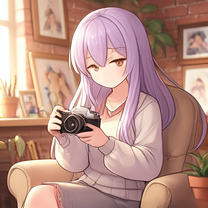
My First Steps: Talking About Photography and Art in Germany
Okay, so here I am, six months into living in Berlin. It’s incredible, honestly. But let’s be real, the biggest challenge – aside from the language, of course – is just… communicating. I love photography and art, and I really wanted to connect with people who share that passion, but figuring out how to talk about it in German has been a rollercoaster. It’s not just about knowing the words; it’s about understanding the nuances, the expectations. I’m going to share what I’ve learned, the stumbles, and hopefully, some useful phrases you can use too.
The Initial Awkwardness – “Was ist das?”
The first few times I went to a gallery, or even just to a café where people were sketching, I just froze. I’d see a beautiful painting and desperately want to say something, anything. Instead, I’d just mutter, “Was ist das?” (What is that?) It felt so incredibly basic, and I realized it wasn’t a natural way to start a conversation. People looked at me like I’d asked them to explain the meaning of life.
I quickly learned that simply stating something isn’t enough. A better approach is to express your reaction first. For example, if I saw a really striking photograph, I’d say, “Das ist sehr interessant!” (That is very interesting!). Then, maybe add, “Was inspiriert den Künstler?” (What inspires the artist?) It felt a little less clumsy.
Talking About Your Photos – “Ich habe ein Foto gemacht…”
My photography hobby has been a particularly tricky area. I’m used to describing my photos in very detailed, technical terms. But in Germany, people seem to want a slightly softer, more evocative description.
I’ve found that starting with “Ich habe ein Foto gemacht…” (I took a photo…) is a good opener. Then, I try to focus on the feeling the photo gives me.
Example: “Ich habe ein Foto gemacht von der Elbe. Es ist sehr ruhig und friedlich.” (I took a photo of the Elbe. It’s very quiet and peaceful.)
Another useful phrase is “Ich finde es schön.” (I find it beautiful.) However, I’ve learned that saying “Das ist schön” (That is beautiful) feels a bit too… definitive. It’s better to show appreciation.
Discussing Art – “Was halten Sie von…?”
Asking for opinions on art is always a little daunting. I initially felt like I had to offer a brilliant, insightful critique, which, of course, I didn’t!
I’ve discovered it’s much safer to start with a simple, “Was halten Sie von…?” (What do you think of…?). Then, I listen carefully to their response.
I had a slightly embarrassing experience at a street art exhibition. I said, “Ich finde diese Wandmalerei sehr innovativ!” (I find this mural very innovative!) and the man next to me just stared at me blankly. Later, I asked a friend for help, and she explained that “innovativ” can sometimes sound pretentious in German. It’s better to say, “Ich finde es interessant” (I find it interesting) or “Es ist ein interessanter Ansatz” (It’s an interesting approach).
Practical Phrases and Vocabulary
Here are some phrases I’ve found particularly useful:
- “Ich bin ein Anfänger/eine Anfängerin in der Fotografie/Kunst.” (I’m a beginner in photography/art.) – Useful for explaining your level of experience.
- “Ich interessiere mich für….” (I’m interested in…) – “Ich interessiere mich für Street Art” (I’m interested in Street Art).
- “Haben Sie Tipps für mich?” (Do you have any tips for me?) – A great way to show you’re open to learning.
- “Das ist eine tolle Ausstellung!” (That’s a great exhibition!) – Always good to express enthusiasm.
Common Misunderstandings – Tone and Formality
German is very formal, especially when you’re first starting out. I’ve accidentally come across as incredibly rude a few times by being too direct. For example, I once bluntly asked a gallery owner, “Ist das Bild gut?” (Is the painting good?) He visibly flinched!
I’ve since learned to soften my questions with phrases like “Ich bin neugierig” (I’m curious) or “Könnten Sie mir mehr darüber erzählen?” (Could you tell me more about it?).
Also, remember that Germans value politeness and respect. Don’t interrupt people, and always use “Sie” (formal you) unless specifically invited to use “du” (informal you).
Moving Forward – Embrace the Conversation
Honestly, the biggest takeaway has been to just talk. Don’t be afraid to make mistakes. People appreciate the effort, even if your German isn’t perfect. Every conversation, even the awkward ones, is a step forward. I’m slowly getting more comfortable expressing my passion for photography and art, and that’s hugely rewarding. My goal is to find a local photography group and finally feel like I’m part of a creative community here in Berlin. Ich drücke Ihnen die Daumen! (I’m rooting for you!).


Leave a Reply