
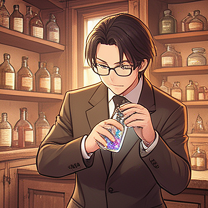
Navigating the Apotheke: My First Forays into German Pharmacy
Okay, so here I am, six months in Berlin, and let me tell you, I’ve learned a lot of German. Mostly through sheer panic and embarrassment, but learning nonetheless. One area that’s been particularly tricky, and surprisingly important for everyday life, is talking about pharmacies and medicine. It’s not just about buying ibuprofen; it’s about actually communicating what’s wrong, understanding the options, and generally not making a complete fool of myself. And, honestly, the formal expressions are brutal.
The Initial Shock: “Sie” and the Apotheke
The first time I went to the Apotheke – the pharmacy – I was determined to be polite. I’d practiced saying “Ich möchte bitte…” (I would like please…) and “Wie viel kostet das?” (How much does that cost?). But then the pharmacist, a very serious man named Herr Schmidt, just responded with a very firm “Was möchten Sie?” (What would you like?). Suddenly, all my carefully rehearsed phrases felt…wrong. It’s so much more formal than I’m used to! It made me feel incredibly small and self-conscious. I nearly mumbled my request for a painkiller and fled.
Key Vocabulary: Starting the Conversation
Let’s get some basics down. Here’s what I’ve found most useful:
- Schmerzen: Pain
- Kopfschmerzen: Headache
- Allergie: Allergy
- Arznei: Medicine / Drug
- Tablette: Tablet
- Zäpfchen: Suppository
- Flasche: Bottle (of liquid medicine)
- Dosierung: Dosage
- Nebenwirkungen: Side effects
I also learned that saying “Ich habe Schmerzen im…” (I have pain in…) is the polite way to start. For example, “Ich habe Schmerzen im Kopf” (I have a headache) is perfect. Don’t just blurt out “Ich habe Kopfschmerzen!” – it feels abrupt.
The Misunderstanding: “Ich brauche…” vs. “Ich möchte…”
This was a HUGE one. I kept saying “Ich brauche…”, (I need…) when I really meant “Ich möchte…” (I would like…). I asked for a strong painkiller because I had a terrible migraine. Herr Schmidt looked at me strangely and said, “Sie brauchen das nicht. Eine Tablette ist ausreichend.” (You don’t need that. A tablet is sufficient.) It turns out I’d asked for a bottle of something incredibly strong that was only for emergencies. Lesson learned: always use “Ich möchte” when asking for something!
Dialogue Example: Requesting Medication
- Me: “Guten Tag, Herr Schmidt. Ich habe starke Kopfschmerzen. Ich möchte bitte eine Tablette gegen Kopfschmerzen.” (Good day, Mr. Schmidt. I have a bad headache. I would like please a tablet against headaches.)
- Herr Schmidt: “Verstanden. Welche Art von Kopfschmerzen haben Sie?” (Understood. What kind of headache do you have?)
Formalities and Politeness: “Bitte” and “Entschuldigung” are Your Friends
Seriously, these two words are your lifelines. “Bitte” (please) is used constantly. Even if you’re just pointing at something, adding “Bitte” makes it feel much more polite. “Entschuldigung” (excuse me) is essential for getting the pharmacist’s attention and for apologizing if you’ve made a mistake (which, trust me, you will).
The Importance of “Wie?” (How?)
When you’re asking about dosages or side effects, you must use “Wie?” (How?). It’s far more polite than just asking a direct question.
- Me: “Wie dosiere ich die Arznei?” (How do I dose the medicine?)
- Herr Schmidt: “Nehmen Sie eine Tablette alle sechs Stunden ein.” (Take a tablet every six hours.)
My Ongoing Struggle: Understanding Medical Terminology
Even now, I stumble over the German medical terminology. I’ve learned words like “Rhinitis” (Rhinitis) and “Bronchitis” (Bronchitis), but I still struggle to pronounce them correctly. I even accidentally asked for “Wurzelbrot” (root bread) instead of “Wurzel” (root) when trying to describe a rash. (It’s embarrassing, but honestly, everyone makes mistakes!).
Final Thoughts – Be Patient and Keep Asking
The biggest takeaway is this: don’t be afraid to ask for clarification. Germans are generally polite and willing to help, even if they seem a bit formal at first. If you don’t understand something, politely say “Könnten Sie das bitte erklären?” (Could you please explain that?). And, most importantly, keep practicing. Each trip to the Apotheke is a valuable learning experience. I’m slowly getting the hang of it, one formal “Sie” and one painstakingly correct phrase at a time.
Do you want me to create a specific scenario, like requesting a specific medicine, and build a more detailed dialogue?


Leave a Reply