
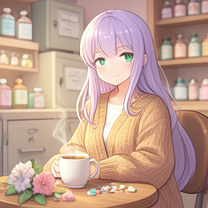
Navigating the Apotheke: My First Forays into German Pharmacy
Okay, so here I am, six months in Berlin, and let me tell you, learning German has been… intense. It’s not just the grammar drills; it’s the actual conversations. And recently, I’ve been completely thrown into the deep end when I needed to visit the Apotheke – the pharmacy. It’s a surprisingly complex area of the language, and honestly, it was a little terrifying at first. I’d pictured myself strolling in, effortlessly asking for ibuprofen, and it didn’t quite go like that.
The Initial Panic: “Ich brauche Schmerzmittel!”
The first time I went, I was genuinely panicked. I’d had a killer headache and remembered hearing everyone talk about the Apotheke as the place to go for medicine. So, I confidently walked in and blurted out, “Ich brauche Schmerzmittel!” (I need painkillers!). The pharmacist, a lovely older gentleman named Herr Schmidt, blinked at me. He then proceeded to ask me a lot of questions. Not just “What kind of pain?” but things like, “Wo tut es weh?” (Where does it hurt?), “Wie stark ist der Schmerz?” (How strong is the pain?), and crucially, “Haben Sie Fieber?” (Do you have a fever?). It was overwhelming! I just wanted the pills! I quickly realized that in Germany, they take medication seriously. It’s not just a casual “Oh, I have a headache.”
Essential Vocabulary – Beyond “Schmerzmittel”
Let’s talk about what I actually needed to know. Beyond the obvious “Schmerzmittel” (painkillers), here’s what’s become useful:
- Medikamente: (Medicines/Drugs) – This is your all-rounder.
- Rezept: (Prescription) – I needed this for a stronger muscle relaxant. Don’t even think of asking for something that needs a doctor’s order unless you have one!
- Freiverkäufliche Medikamente: (Over-the-counter medicines) – These are the things you can buy without a prescription – paracetamol (Paracetamol!), ibuprofen, etc.
- Allergien: (Allergies) – It’s essential to mention any allergies you have – “Ich bin allergisch gegen Penicillin” (I am allergic to penicillin).
- Nebenwirkungen: (Side effects) – “Haben Sie Nebenwirkungen?” (Are you experiencing any side effects?) – You’ll definitely get asked about this!
A Typical Conversation (and My Stumbling)
Here’s a simplified version of a conversation I had last week:
- Me: “Guten Tag, Herr Schmidt. Ich brauche etwas gegen meine Erkältung.” (Good day, Mr. Schmidt. I need something for my cold.)
- Herr Schmidt: “Was genau verschlimmert Ihre Symptome?” (What exactly makes your symptoms worse?)
- Me: “Es ist hauptsächlich die Husten. Und ich habe eine leichte Halsschmerzen.” (It’s mostly the cough, and I have a slight sore throat.)
- Herr Schmidt: “Haben Sie Fieber?” (Do you have a fever?)
- Me: “Nein, kein Fieber.” (No, no fever.)
- Herr Schmidt: “Okay. Ich empfehle Ihnen Paracetamol oder Ibuprofen. In welcher Dosierung möchten Sie es?” (Okay. I recommend paracetamol or ibuprofen. In what dosage would you like it?)
I completely blanked on the dosage! I mumbled something about “die normale Dosis” (the normal dose) and thankfully he patiently explained. I felt so stupid.
Common Mistakes and How to Avoid Them
I’ve made a few embarrassing mistakes. Firstly, trying to haggle over the price of medication is a massive no-no. It’s considered incredibly rude. Secondly, assuming the pharmacist is a doctor. They are not. They dispense medication and offer advice, but they cannot diagnose or prescribe. Finally, I learned that saying “Ich brauche” is often too direct. It can sound demanding. It’s better to say, “Könnten Sie mir bitte etwas gegen… empfehlen?” (Could you recommend something for…?).
Practical Tips for Your First Apotheke Visit
- Have your insurance card (Krankenkassenkarte) ready: You’ll need it.
- Be prepared to answer questions: They will ask about your symptoms. Try to be as specific as possible.
- Don’t be afraid to ask for clarification: If you don’t understand something, politely ask them to explain it again. “Könnten Sie das bitte langsamer sagen?” (Could you please say that more slowly?)
- Don’t just grab anything: Always discuss your symptoms and the potential medication with the pharmacist.
Visiting the Apotheke has been a huge learning experience, and honestly, it’s given me a much deeper understanding of German culture – the emphasis on health, the importance of precise communication, and the role of the pharmacist as a trusted advisor. It’s still a challenge, but I’m getting there. Next time, I’m aiming for a much smoother conversation – and maybe a little less panic! Ich glaube, ich kann es schaffen! (I believe I can do it!)

Leave a Reply