
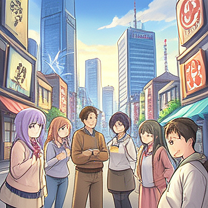
My First Month in Berlin: Navigating the Integration Maze
Okay, so, I’ve been in Berlin for just over a month now, moving from Ukraine, and honestly, it’s been… a lot. I knew it wouldn’t be easy, but the reality of trying to integrate feels way more complicated than I’d imagined. It’s not just about learning German; it’s about understanding this whole system, and it’s starting to feel a bit overwhelming.
The Conversation with Klaus
It all started with a chat I had with a guy named Klaus at the community center where I’m taking German classes. He was saying, “Hallo Klaus! Wie geht es dir heute? Mir geht es gut, danke. Und dir? Mir geht es ganz gut, obwohl ich über die aktuelle Migrationssituation nachdenke. Das kann ich gut verstehen. Es ist ein sehr komplexes Thema, oder?”
I nodded, completely lost for a second. I managed to reply, “Ja, ich denke, die Anforderungen an die Integration sind enorm.” He then started talking about how the authorities and society were trying to manage the integration challenge, and it felt a bit abstract at first.
The Feeling of Being Overwhelmed
Honestly, the way he described it – “Viele Menschen Schwierigkeiten haben, sich in eine neue Kultur zu integrieren” – it felt so… accurate. It’s not just about speaking German, is it? It’s about understanding the unspoken rules, the customs, the way things work here. I’ve made a few awkward situations already. Like yesterday, I offered a compliment to the barista at my local “Kaffeehaus” – “Das ist ein sehr schönes Hemd!” – and he just stared at me! I realized I hadn’t noticed he was wearing a uniform. It’s little things like that!
Bureaucracy Blues
What’s really frustrating is the bureaucracy. Klaus also mentioned, “Die Prozesse werden ja oft nur passiv beobachtet. Das ist leider oft der Fall.” And it’s true! I’m trying to register for a “Wohnung” – an apartment – and the forms are so long and complicated. I spent hours on the phone trying to understand the requirements for proof of income, and it’s a nightmare. I even asked a colleague, “Wie funktioniert das denn?” and he just shrugged and said, “Du musst einfach alles nachfragen.” (You just have to ask everything.) It’s not helpful!
The Lack of Connection
He also talked about how support offered to migrants isn’t always effective, “Es wird gesagt, dass die Unterstützung angeboten wird, aber manchmal wird sie nicht effektiv genutzt.” I’ve been to a few integration workshops, and they’re well-intentioned, but sometimes it feels like they don’t really address my needs. I need help with practical things, like navigating public transport or understanding my employment contract – “Mein Arbeitsvertrag!” – not just generic advice about German culture.
Research and Solutions
It made me think about what Klaus said about needing more research, “vielleicht wäre es hilfreich, wenn mehr Forschung betrieben würde, um die Faktoren zu identifizieren, die eine erfolgreiche Integration beeinflussen.” It feels like everyone is talking about the problem, but no one’s really figuring out how to fix it effectively. I keep hoping they’ll investigate, “Warum ist das so schwer für Menschen aus anderen Ländern?”
Small Steps, Big Feelings
Despite all the frustration, I’m trying to stay positive. I’ve started volunteering at a local refugee center, “Ein Herz für Berlin”, which is a great way to meet people and practice my German. “Es ist wichtig, sich gegenseitig zu respektieren und voneinander zu lernen,” as they say. It’s also made me realize how important it is to be patient with myself. I keep making mistakes – “Ich habe mich total verschwommen!” – but I’m learning.
A Shared Responsibility
And I’m beginning to understand what Klaus meant about it being a shared responsibility, “Es ist eine gemeinsame Aufgabe, die wir alle erfüllen müssen, um eine inklusive Gesellschaft zu schaffen.” It’s not just up to the government or the NGOs; it’s up to everyone. I saw a group of local kids playing with some newly arrived children in a park, and it was a beautiful thing to witness.
My Next Steps
I’m planning on spending more time researching the different support services available in Berlin. I also want to connect with other migrants from Ukraine to share experiences and support each other. “Wir sind nicht allein!” (We’re not alone!) This whole process feels like a long journey, but I’m determined to make it work. I hope I can eventually say, “Mir geht es super!” – “I’m doing great!”
—
Do you want me to expand on a particular aspect of this experience, such as a specific bureaucratic challenge, a conversation with a new acquaintance, or a practical learning tip?


Leave a Reply