
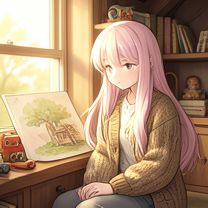
Navigating Nostalgia: My Journey with German Memories
Okay, so here I am, six months in Berlin, and let’s be honest, German is hard. But it’s not just about verb conjugations and noun declensions. It’s about understanding people, their stories, and how they see the world. And lately, I’ve realized that talking about memories – Erinnerungen – is a HUGE key to unlocking conversation, and let me tell you, Germans really value reminiscing. It’s almost a social obligation!
The First “Ich war früher…”
My first real stumble happened with a colleague, Thomas, at the Kaffeepause (coffee break). He started talking about his childhood, specifically about building a treehouse with his grandfather. He said, “Ich war früher oft mit meinem Opa im Wald. Wir haben einen kleinen Baumhaus gebaut.” I nodded, trying to look interested, and replied, “Oh, das klingt… nett.” (Oh, that sounds… nice.)
Immediately, I regretted it. “Nett” feels so… vague. Thomas’s eyebrows raised slightly, and he said, “Ja, aber was genau hat ihr gemacht? Hat ihr gespielt? Habt ihr etwas gebaut?” (Yes, but what exactly did you do? Did you play? Did you build something?). I realized I’d just given a super basic, polite response and hadn’t actually shown any genuine engagement.
- Vocabulary takeaway: Ich war früher (I was in the past), Erinnerungen (memories), mit meinem Opa/Eltern (with my grandpa/parents), ein Baumhaus (a treehouse), spielen (to play), bauen (to build). Don’t just say “nett,” try to describe what they were doing.
Asking About Specific Memories – And My Mistakes
I’ve been trying to be better, and it’s still a work in progress. I asked my flatmate, Lena, about her childhood holidays. “Wo warst du als Kind gern im Urlaub?” (Where did you like to go on holiday as a child?) I beamed, thinking I was doing so well.
She replied, “Wir sind oft nach Italien gefahren. Meine Oma hat immer Spaghetti gemacht.” (We often went to Italy. My grandma always made spaghetti.)
I enthusiastically responded, “Spaghetti! Das ist sehr gut!” (Spaghetti! That’s very good!). Again, I’d fallen into the “positive statement” trap. Lena looked a little confused. She explained, “Ja, aber du hast nicht gefragt, wie die Spaghetti waren. Waren sie salzig? War es eine besondere Sauce?” (Yes, but you didn’t ask how the spaghetti were. Were they salty? Was it a special sauce?).
Ugh. I’d focused on the food itself instead of the experience of making it.
- Practical Tip: Asking “Wie…?” (How…?) is essential when someone describes a memory. It shows you’re interested in the details.
Common Phrases & Small Talk
I’ve started picking up some useful phrases. When someone says, “Das war eine gute Zeit,” (That was a good time), it’s a natural response to say, “Ja, stimmt. Was hat dir daran gefallen?” (Yes, that’s right. What did you like about it?). It opens the door for them to elaborate.
Another useful one is “Weißt du noch…?” (Do you remember…?). I heard my boss, Herr Schmidt, say it when talking about his student days. He then launched into a story about a crazy concert, and I realized it’s a signal that he wants to share a specific memory.
Dealing with Emotion – Es war…
Sometimes, talking about the past brings up feelings. I was chatting with a shopkeeper, Herr Müller, about his childhood in the countryside, and he said, “Es war wunderschön, aber auch manchmal traurig.” (It was beautiful, but sometimes sad.)
I instinctively said, “Oh, das tut mir leid!” (Oh, I’m sorry!). Which, while well-intentioned, felt a bit awkward. Lena later explained that in Germany, simply acknowledging the sadness – “Ja, das kann ich mir vorstellen” (Yes, I can imagine that) – is perfectly acceptable and often a more appropriate response. It shows you’re acknowledging their feelings, not trying to fix them.
- Important Note: Germans are generally pretty reserved when expressing strong emotions, especially in initial conversations.
My Progress (And What I’m Still Working On)
It’s still early days, but I’m noticing a huge difference in the conversations now. I’m attempting to ask more specific questions, actively listening for “Wie…?”, and avoiding generic phrases like “nett” or “gut”. I’m even starting to recognize the subtle shifts in tone that signal someone wants to delve deeper into a memory.
My biggest challenge? Resisting the urge to jump in with my own similar experiences. Germans often want to focus on their memories, not a parallel story from my life.
“Nicht abschweifen!” (Don’t go off on a tangent!) – Lena’s constant reminder.
Ultimately, talking about memories is proving to be a fantastic way to connect with people and truly understand the culture here. It’s not just about learning the language; it’s about learning from it. Weiter geht’s! (Let’s keep going!).


Leave a Reply