
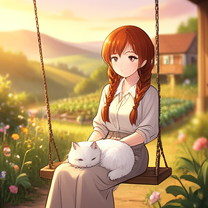
Finding My Footing: Talking About Rural Life in Bavaria
It’s been six months since I moved from London to a tiny village called Oberammergau in Bavaria. Honestly, the first few weeks were a complete blur of disorientation, trying to understand the bus schedules and ordering groceries. But now, I’m starting to settle in, and I’m realizing that one of the biggest hurdles wasn’t the language itself – though Deutsch is definitely a challenge – but understanding how people talk about their lives, especially here in the countryside. It’s a different world, you know? A slower, more connected one.
The Initial Confusion: “Wie geht’s Ihnen?”
The first time I was introduced to Frau Schmidt, my neighbour, she greeted me with a beaming smile and, of course, “Wie geht’s Ihnen?” I panicked! I’d practiced “Wie geht es dir?” (How are you?) with my language partner, expecting a casual response. I replied, “Mir geht es gut, danke!” (I’m fine, thank you!), and she looked genuinely puzzled. It turned out “Ihnen” is the formal ‘you’ – essential here! I’ve made that mistake several times since. A good friend, Thomas, patiently corrected me, saying, “Sie are appropriate for someone you’ve just met, or someone older.” Lesson learned – always check the context.
Everyday Conversations About the Farm
My work is at a small brewery just outside the village. The guys there are incredibly friendly, and they frequently talk about their families and their farms. I heard them discussing “die Ernte” (the harvest) last week, and it was completely new to me. They were talking about how the potatoes were coming in well, and someone mentioned they were “mit dem Traktor fahren” (driving the tractor). I asked, “Was macht die Ernte?” (What is the harvest like?) and one of the brewers, Klaus, explained, “Es ist ein gutes Jahr, wenn die Ernte gut ist!” (It’s a good year if the harvest is good!). It’s fascinating to hear about the rhythms of rural life.
Ordering in the Buschenschank
Last weekend, I went to a Buschenschank – a traditional beer garden attached to a farm. It was amazing! But navigating the menu was tricky. They had everything listed in regional dialect! I wanted to order a “Radler” (a beer and lemonade mix), and I asked, “Ich hätte bitte einen Radler, bitte?” (I would like a Radler, please?). The server, a young man named Luke, replied, “Ein Radler? Das ist hier nicht so üblich.” (A Radler? That’s not common here). Apparently, they mostly serve local beer. I had to explain what a Radler was, and eventually he brought me a delicious Hefeweizen (wheat beer). It was a good reminder that even simple requests can require explanation.
Asking About Family & Traditions
One of the biggest differences I’ve noticed is the importance of family and tradition. I was talking to my landlord, Herr Berger, about the upcoming Weihnachtsmärkte (Christmas markets). I asked him, “Was machen Sie zur Weihnachtszeit?” (What do you do during Christmas time?) and he launched into a long story about his family’s tradition of baking Lebkuchen (gingerbread) and spending time with his grandchildren. He said, “Es ist wichtig, die Traditionen zu pflegen.” (It’s important to maintain the traditions.) It’s a beautiful sentiment, and I’m trying to learn about and participate in these local customs.
Common Phrases and Vocabulary
Here are a few phrases that have been particularly useful:
- “Wie ist das Wetter?” (How’s the weather?) – Everyone talks about the weather!
- “Schönes Wetter heute!” (Beautiful weather today!) – A common greeting.
- “Das ist typisch deutsch!” (That’s typical German!) – Often said with a laugh when something unexpected happens.
- “Na, alles in Ordnung?” (So, everything alright?) – A friendly, informal way to check on someone.
My Ongoing Learning Journey
I still have so much to learn, especially when it comes to understanding the nuances of Bavarian culture and dialect. But I’m slowly getting there. Every conversation, every mistake, is a learning opportunity. I’m starting to feel a bit more comfortable, and I’m even beginning to appreciate the slower pace of life here. Viel Glück (Good luck) to me! I’m determined to keep practicing my Deutsch and embracing the beauty of rural life in Bavaria. Maybe next time, I’ll even be able to confidently order a Radler without needing to explain what it is!


Leave a Reply