
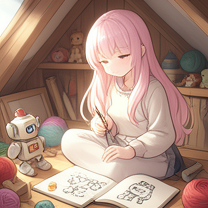
My First Steps Talking About Hobbies in Germany
Okay, deep breaths. It’s been six months since I moved to Berlin, and honestly, the language barrier is still a monster. I can order a coffee (usually with a lot of pointing and desperate smiling), and I understand basic instructions, but actually talking about anything beyond my immediate needs? That’s proving to be…challenging. Especially when it comes to something as personal as my hobbies.
The Initial Awkwardness: “Was machst du gern?”
The first time someone asked me, “Was machst du gern?” (What do you like to do?), I completely froze. It’s such a simple question, right? But my brain just blanked. I mumbled something about “television” – fernsehen – and then internally panicked about whether that was considered a cool or boring hobby.
I quickly realised that simply saying “Ich lese” (I read) wasn’t cutting it either. It felt… dry. Like I was just reciting a list. I needed to find a way to make it feel more natural, more me.
Hobby Conversations – The Vocabulary I’m Using
Here’s the vocabulary I’ve been trying to use, and where I’ve stumbled (and learned!).
- Mein Hobby ist… (My hobby is…) – This is my go-to phrase.
- Ich interessiere mich für… (I’m interested in…) – This feels a little less assertive, which is good when I’m feeling hesitant.
- In meiner Freizeit… (In my free time…) – Perfect for talking about what I do when I’m not working.
- Ich bin ein/e… (I am a…) – Used to describe creative pursuits – “Ich bin eine Künstlerin” (I am an artist), “Ich bin ein Musiker” (I am a musician).
- Ich liebe… (I love…) – Definitely more enthusiastic! “Ich liebe das Malen” (I love painting) – I used this after a particularly good painting session!
A Typical Misunderstanding (and How I Fixed It)
Last week, I was chatting with my colleague, Steven, about my weekend. I wanted to say I was going to visit a Kunstwerkstatt (art workshop) to try pottery. I blurted out, “Ich mache Keramik!” (I make ceramics!). Steven’s face went completely blank. Then he explained that “machen” can mean “to make” but also “to do,” and in this context, it sounded like I was saying I did ceramics – like, I perform ceramics.
He laughed and gently corrected me: “Nein, nein! Du bist eine Keramik-Künstlerin! Du machst mit Keramik!” (No, no! You are a ceramic artist! You participate in ceramics!). It was mortifying, but a brilliant learning moment. I now consciously try to use more specific verbs like “arbeiten” (to work) or “schaffen” (to create) when talking about creative activities.
Talking About Creativity – “Kreativ sein”
Another phrase I’ve been hearing a lot is “kreativ sein” (to be creative). I used it when I was telling a friend about my watercolour paintings – “Ich versuche, kreativ zu sein” (I’m trying to be creative). It felt a little cliché, but everyone understood. I’m trying to push myself to use it more confidently.
My First Small Success
The other day, I was in a café with some new friends, and they asked if I had any hobbies. I took a deep breath and said, “Ich interessiere mich für das Zeichnen und Malen. Ich mag es, in meiner Freizeit Bilder zu machen.” (I’m interested in drawing and painting. I like to make pictures in my free time).
They asked me to show them some of my work. I felt a little nervous, but I did! And they actually liked them! That little moment of connection, of sharing something personal, was incredible.
Next Steps – Don’t Be Afraid to Make Mistakes!
I’m still a long way off from feeling completely comfortable talking about my hobbies in German, but I’m getting there. The most important thing I’ve learned is not to be afraid of making mistakes. Everyone makes them! Steven’s pottery story is a perfect example. And honestly, the more I try, the more I’m learning.
My goal now is to keep practicing, keep listening, and keep saying “Was machst du gern?” – even if I still feel a little bit terrified sometimes. Ich glaube es! (I believe it!)


Leave a Reply