
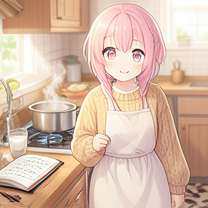
My Kitchen, My Struggle: Learning German Through Cooking (and Imperatives!)
Okay, so moving to Berlin was… a lot. The language, the pace of life, the sausages – it’s all still sinking in. I’m desperately trying to blend in, and honestly, the best place I’ve found to practice is in my tiny kitchen. I’ve always loved cooking, but suddenly, every recipe feels like a monumental challenge because of the German. Today, I want to talk about how I’m tackling it – specifically, learning to talk about food and, crucially, the Imperativ (the imperative mood). It’s terrifying, but also strangely brilliant.
The First Disaster: “Mehr Salz?”
The first few times I’ve tried to follow a recipe, it’s been absolute chaos. Last week, I was attempting to make Kartoffelsalat (potato salad) for my colleague, Markus. I’d found a simple recipe online and, armed with my newfound vocabulary, I started.
“Gib mir den Essig!” (Give me the vinegar!) I blurted out, completely confidently. Markus stared at me. “Was? Warum?” (What? Why?) he asked, utterly bewildered. Turns out, I’d used the du form – the informal ‘you’ – with him. It’s completely wrong when giving a direct order, especially to a colleague! He patiently explained that using the Sie form (formal ‘you’) would have been much more polite and appropriate. It felt incredibly stupid, but I got the hang of it quickly. Now I always say, “Könnten Sie mir bitte den Essig geben?” (Could you please give me the vinegar?).
The Imperative: Not a Command, Really
The Imperativ is used to give commands or make requests. It’s not just a forceful ‘do this!’ It’s more like a gentle instruction, especially when talking to someone you know. The key is the verb ending. It changes depending on the verb.
Here are a few basic examples:
- Koche! (Cook!) – “Cook!”
- Schneide! (Cut!) – “Cut!”
- Rühre! (Stir!) – “Stir!”
- Gib! (Give!) – “Give!”
Notice how the stem of the verb remains, and the ending changes. It’s simpler than it looks, but it tripped me up so many times.
Asking for Help – and Giving Instructions
My biggest struggle is actually asking for things. I tried to make Apfelstrudel (apple strudel) for my Landlord, Herr Schmidt, a few days ago. I wanted to ask him to help me roll the dough, and I said, “Du rollst den Teig!” (You roll the dough!). He practically choked on his tea! He explained that I needed to phrase it more politely.
The correct way to ask for help is “Könnten Sie den Teig rollen?” (Could you roll the dough?). It sounds so much smoother, doesn’t it? It’s not just about the grammar; it’s about showing respect.
Common Phrases and Recipes
Here are some other useful phrases I’ve picked up:
- “Erhöhe den Hitze!” (Increase the heat!) – Super helpful when baking.
- “Füge jetzt die Zucker hinzu!” (Add the sugar now!) – A vital instruction.
- “Probiere es!” (Try it!) – Asking someone to taste something.
- “Das ist lecker!” (That’s delicious!) – When someone else has cooked something.
Let’s look at a simple recipe: Rührei (scrambled eggs). I could say: “Rühre die Eier in einer Schüssel.” (Stir the eggs in a bowl.) or “Schlage die Eier mit einer Gabel.” (Whisk the eggs with a fork.) It’s actually quite straightforward once you get the hang of the Imperativ.
Mistakes and Corrections – Learning Through Embarrassment
I’ve made so many mistakes, and honestly, that’s part of the learning process. I once told my neighbor, Frau Lehmann, that she needed to “vergiss das Salz!” (forget the salt!) while she was making Suppe (soup). She looked horrified! She patiently corrected me, saying that I should have asked, “Sollen Sie das Salz vergessen?” (Should you forget the salt?).
It’s mortifying, but I’m starting to understand that making mistakes is completely normal. The important thing is to keep practicing, keep asking questions, and keep learning.
My Next Goal: Cooking with Confidence (and the Right Words!)
My aim now is to be able to confidently ask for ingredients, give clear instructions when cooking, and maybe even – dare I dream – create a decent meal for my new friends here in Berlin. The Imperativ still feels a little strange, but I’m slowly getting a feel for it. And who knows, maybe one day I’ll master that Kartoffelsalat without causing a complete diplomatic crisis!
Would you like me to write about another aspect of my language learning journey? Perhaps focusing on ordering food at a restaurant?

Leave a Reply