
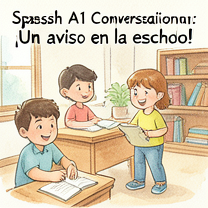
Spanish A1 Conversational: ¡Un aviso en la escuela!
Getting Started with Basic Spanish
Learning a new language can feel daunting, but starting with simple conversations is the most effective approach. This article outlines a practical method for beginners focusing on conversational Spanish at Level A1 – often described as “everyday” Spanish. It’s about building confidence and understanding key phrases you’ll actually use. The focus here is on realistic dialogue and useful vocabulary, rather than complex grammar rules.
The School Announcement: An Example
A learner might first encounter Spanish through a school announcement. Let’s imagine a student, Mateo, recording a short notice for his classmates regarding the upcoming “Spanish A1 Conversational” class offered after school. The tone is friendly and encouraging.
Mateo’s Announcement (Spanish & English)
Mateo says:
- (Spanish): “¡Hola a todos! Soy Mateo. Quiero hablar con vosotros sobre una nueva clase.”
- (English Translation): “Hello everyone! I’m Mateo. I want to talk with you all about a new class.”
Mateo continues:
- (Spanish): “Es una clase de Conversación en Español A1. Es muy fácil y divertida. Aprendemos a hablar sobre cosas del día a día.”
- (English Translation): “It’s a conversational Spanish A1 class. It’s very easy and fun. We learn to talk about everyday things.”
Useful Phrases for Beginners
Here are some essential phrases a learner might hear or use:
- ¿Cómo estás? (How are you?) – A common greeting. A visitor could ask this to someone they meet for the first time.
- Bien, gracias. ¿Y tú? (Good, thank you. And you?) – The typical response. Note the informal “tú” form.
- Me llamo… (My name is…) – Introduce yourself. “Me llamo Ana.”
- ¿Cuánto cuesta? (How much does it cost?) – Useful in a shop. A shopper might use this phrase.
- Por favor (Please) – Always a polite addition!
- Gracias (Thank you) – Expressing gratitude.
Common Mistakes and Corrections
A learner will inevitably make mistakes. One common mistake is incorrect pronoun usage (“yo” instead of “tú”). A teacher might gently correct this.
Example Dialogue:
- Student: “Yo quiero aprender español.”
- Teacher: “¡No, no! Tú quieres aprender español. Tú eres el estudiante.” (No, no! You want to learn Spanish. You are the student.)
Practice Dialogue – At the School Office
Imagine a learner arrives at the school office and needs information. Here’s how a simple conversation might unfold:
- Learner: “¿Dónde está la biblioteca?” (Where is the library?) – A direct question.
- Receptionist: “Está al final del pasillo, a la derecha.” (It’s at the end of the hallway, on the right.)
Tips for Success
- Start with Greetings and Introductions: Master phrases like “Hola,” “Buenos días/tardes/noches,” and “Me llamo…”
- Listen Actively: Pay attention to how native speakers use the language.
- Don’t Be Afraid to Make Mistakes: Mistakes are a natural part of the learning process! Focus on communication, not perfection.
- Practice Regularly: Even just 15 minutes a day can make a difference.
With consistent effort and a focus on conversational practice, anyone can begin to confidently navigate the world of Spanish at Level A1.


Leave a Reply