
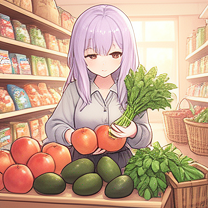
My First Time Navigating the Gemütlichkeit – and the Supermarket!
Okay, so, let me be honest. Moving to Berlin was… a lot. The language, the bureaucracy, the sheer size of everything. But honestly, some of the most nerve-wracking moments were just trying to buy groceries. I’m not a natural shopper, and my attempts to speak German before this were, let’s just say, embarrassing. I’d practice saying “Ich möchte eine Banane” (I would like a banana) a million times, then completely freeze up when faced with a real person.
The Panic of the Potato
The first few weeks, I mostly survived on pasta and supermarket basics. Then, I realized I was running out of essentials. My first solo trip to the Rewe supermarket was… chaotic. I went to buy potatoes – Kartoffeln – and I ended up asking a very confused woman if she wanted to buy eine potato with me. She just stared at me! I blurted out “Ich brauche Kartoffeln!” (I need potatoes!) and she thankfully understood. I quickly learned that just saying you need something doesn’t automatically get you what you want.
Understanding Quantity Words – The Key to Not Looking Like a Fool
That’s when I started really focusing on the quantitätswörter (quantity words). It felt like the difference between knowing how to build a house and just randomly throwing bricks together. Honestly, it was a game-changer. There are a few key ones you need to learn, and they’re used constantly.
- Ein/Eine: This is the basic “one”. “Ich möchte eine Dose Tomaten.” (I would like a can of tomatoes.) This is so important. I learned this the hard way when I asked for ‘eine’ Apfel (one apple) and received a single, tiny, bruised apple!
- Zwei: That’s “two.” “Ich brauche zwei Milchkartons.” (I need two cartons of milk). I initially asked for ‘zwei’ Stück Brot (two pieces of bread) and got two huge loaves!
- Drei: “Three.” Simple. “Ich möchte drei Äpfel, bitte.” (I would like three apples, please.)
- Vier, Fünf, Sechs…: You get the idea. Don’t be afraid to count things out loud. It’s totally normal here.
Shopping Scenarios – Putting It into Practice
Let’s look at some conversations I’ve had (or desperately wanted to have):
Scenario 1: Asking for Cheese
Me: “Guten Tag! Ich möchte bitte ein Stück Käse, bitte.” (Good day! I would like a piece of cheese, please.)
Shop Assistant: “Welche Art von Käse?” (What kind of cheese?)
Me: (Panicking slightly) “Äh… einen Käse? Bitte?” (Uh… a cheese? Please?)
Shop Assistant (smiling): “Mozzarella? Gouda? Brie?” (Mozzarella? Gouda? Brie?)
I realized I needed to be more specific. I ended up choosing Mozzarella – it seemed like a safe bet.
Scenario 2: Buying Fruit
Me: “Ich hätte gerne fünf Äpfel.” (I would like five apples.)
Shop Assistant: “Sind das Gala-Äpfel oder Cox-Äpfel?” (Are those Gala apples or Cox apples?)
I just wanted apples! I learned quickly that Germans are serious about their apples. I chose Gala.
Mistakes and Lessons Learned
There was this one time I tried to buy oranges – Orangen – and I asked for “ein” Orange. The shop assistant looked at me like I was completely insane. He patiently explained that you need the article (der, die, das) – “die Orange” (the orange). It’s such a simple difference, but it makes a huge impact on your communication!
Also, I learned never to assume a price until you’ve specified how much you want. Asking for “eine” Scheibe Käse (a slice of cheese) resulted in a massive, incredibly expensive chunk of cheese.
Final Thoughts – It Gets Easier
Seriously, the more I went to the supermarket, the better I got. It’s still challenging, of course. My German is still heavily reliant on pointing and smiling. But knowing those basic quantity words – ein, zwei, drei… – has made a massive difference. It’s given me the confidence to actually ask for what I need, and the shop assistants are incredibly patient and helpful. And honestly, that’s a huge part of feeling comfortable here. Now, if you’ll excuse me, I’m going to go buy some zwei Milch and eine Brötchen. Wish me luck!


Leave a Reply