
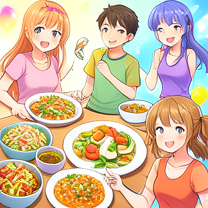
Learning German Through Conversation: My Food Adventures in Berlin
It’s Hard, But Worth It
Moving to Berlin six months ago was… intense. The language, the culture, the sheer size of the city – it was a lot to take in. My German is still incredibly patchy, full of awkward phrases and hopeful guesses. But I’m getting there, slowly but surely. And honestly, some of the best ways I’ve been learning are through everyday conversations, even the slightly embarrassing ones.
Yesterday, I was talking to Alice – she’s a colleague from my startup, a small tech company near Prenzlauer Berg – and we got into a fascinating discussion about food trends. It started with a simple “Hallo! Wie geht es dir heute?” (Hello! How are you today?) and spiraled into a surprisingly deep dive into healthy eating.
The “Superfood” Debacle
“Hallo! Wie geht es dir heute?” she asked, “Hallo Alice! Mir geht’s gut, danke. Und dir? Mir geht es auch gut, danke.” (Hello Alice! I’m good, thanks. And you? I’m also good, thanks.)
She immediately jumped in, “Hast du irgendwelche Ernährungstrends im Auge gehabt?” (Have you noticed any food trends?) – and I realized I hadn’t really paid much attention. “Ja, total!” (Yes, totally!) I exclaimed. “Ich finde es super, dass jetzt so viele Leute auf pflanzliche Ernährung achten.” (I find it great that so many people are now focusing on plant-based diets).
But then I said, “Aber ich finde auch, dass viele Trends überbewertet sind, oder?” (But I also think many trends are overhyped, don’t you?) And she agreed immediately, “Das stimmt. Viele sind doch nur Marketing-Blabla.” (That’s right. Many are just marketing nonsense).
We started talking about “Superfoods,” and it was a classic misunderstanding moment. She was really enthusiastic about them, and I confessed I’d been reading about how expensive they are and whether they’re really healthier than just, you know, regular food. “Ich habe mir zum Beispiel gerade den Trend mit den ‘Superfoods’ angeschaut.” (I’ve just been looking at the ‘superfood’ trend).
Broccoli vs. Spinat – The Great Debate
“Die sind oft teuer und nicht unbedingt gesünder als andere Lebensmittel.” (They are often expensive and not necessarily healthier than other foods). Then the conversation shifted to vegetables. She asked, “Aber ich versuche, etwas mehr Obst und Gemüse zu essen, das ist schon ein guter Anfang. Ich versuche auch, mehr Gemüse zu essen.” (But I’m trying to eat more fruit and vegetables; that’s a good start. I’m also trying to eat more vegetables.)
“Ich finde es toll, wenn man das Gemüse mit verschiedenen Gewürzen und Kräutern zubereitet, das macht den Geschmack besser.” (I love it when you cook vegetables with different spices and herbs, it makes the flavour better.)
And that’s when things got really interesting. Someone had told me that broccoli is healthier than spinach, and I blurted out, “Ich habe gelesen, dass Brokkoli gesünder ist als Spinat – ist das wahr?” (I read that broccoli is healthier than spinach – is that true?).
“Ja, das stimmt!” (Yes, that’s true!) she said, “Brokkoli hat mehr Vitamin C und ist generell geschmacksneutraler, was ihn für Kinder gut macht.” (Broccoli has more Vitamin C and is generally more flavourless, which makes it good for children).
But then I countered, “Aber Spinat ist trotzdem voller Nährstoffe!” (But spinach is still full of nutrients!). We had a mini-debate about it, figuring out that the important thing is how you eat it and how much you eat. “Es kommt eben darauf an, wie man es isst und in welcher Menge.” (It all depends on how you eat it and in what quantity).
Olive Oil and Small Steps
The conversation continued with other bits of advice, like that olive oil is healthier than butter – “Ich habe auch gehört, dass man mit Olivenöl am besten kocht, weil es gesünder ist als andere Öle.” (I’ve also heard that you cook best with olive oil because it’s healthier than other oils). She mentioned the importance of using cold-pressed olive oil, “Ich habe gehört, dass kalte Olivenöl am besten ist, weil es weniger verarbeitet ist.” (I’ve heard that cold-pressed olive oil is best because it’s less processed).
It reminded me that I needed to be careful not to get caught up in all the trends. “Ich finde, es ist wichtig, sich nicht von einzelnen Trends verleiten zu lassen. Man sollte einfach eine ausgewogene Ernährung haben, die man auch langfristig durchhalten kann.” (I think it’s important not to get distracted by individual trends. You should just have a balanced diet that you can stick to in the long run.)
Practical Tips & Future Goals
I confessed my own food preferences: “Ich esse zum Beispiel am liebsten Linsen, weil sie sehr sättigend sind und voller Ballaststoffe sind – das ist viel gesünder als Süßigkeiten!” (I love eating lentils because they are very filling and full of fibre – it’s much healthier than sweets!). She agreed enthusiastically, “Genau, das stimmt!” (Exactly, that’s true!). “Ich bin gesünder als meine Freunde, die sich nur von Fast Food ernähren. Ich bin der gesündeste!” (I’m healthier than my friends who only eat fast food. I’m the healthiest!).
But she quickly added, “Stimmt, aber ich denke, es ist wichtig, sich nicht zu sehr zu stressen. Es geht darum, kleine Schritte zu machen und sich nicht komplett zu verbieten.” (That’s right, but I think it’s important not to stress too much. It’s about taking small steps and not completely forbidding yourself). And then she revealed her plan for the week, “Ich habe mir vorgenommen, jeden Tag einen Apfel zu essen, das ist ein guter Anfang!” (I’ve decided to eat an apple every day, that’s a good start!).
Next Steps
This little conversation was incredibly helpful. It wasn’t about memorizing vocabulary lists, but about experiencing the language and food culture firsthand. I’m definitely going to try to incorporate more vegetables into my diet, and maybe – just maybe – I’ll even brave the “Superfoods” (after doing a little research, of course!). “Danke, Alice!” (Thank you, Alice!) “Und jetzt muss ich los, ich habe noch einen Termin.” (And now I have to go, I have another appointment). “Auf Wiedersehen!” (Goodbye!)
—
Do you want me to expand on a specific aspect of this conversation, such as a particular German phrase or a deeper dive into the food trends discussed?

Leave a Reply