
Learning German grammar can feel challenging—especially when it comes to
understanding cases like Akkusativ, Dativ, and Genitiv.
A simple and effective way to improve is by using sentence ordering
exercises (“Satz ordnen”) combined with a clear, real-life theme.
——————————
✈️ Learn with a real-life context
In this approach, everything is based on one easy-to-follow topic:
traveling to Spain
Instead of random sentences, learners follow a consistent story:
–
Ich fahre nach Spanien
–
Wir fahren morgen nach Spanien
–
Wir fahren mit dem Zug nach Spanien
This makes learning more natural and easier to remember.
——————————
📚 Understanding German cases step by step
The quiz also introduces important grammar concepts:
–
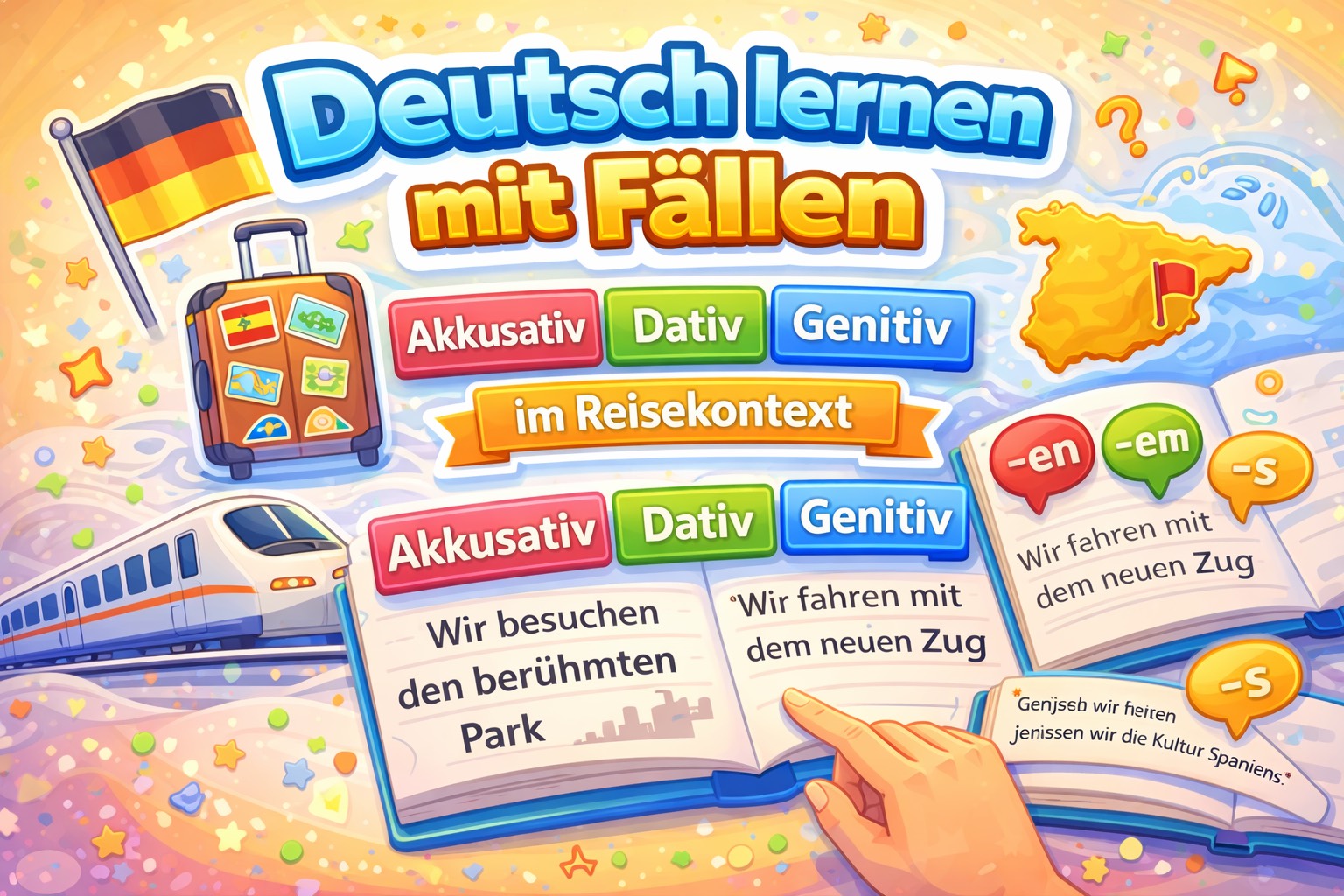
Akkusativ (direct object)
Wir besuchen den berühmten Park
–
Dativ (indirect object / after certain prepositions)
Wir fahren mit dem neuen Zug
–
Genitiv (possession / formal use)
Während der Reise genießen wir die Kultur Spaniens
By practicing these in context, learners build a deeper understanding of
how German really works.
——————————
📈 From beginner to advanced
The exercises follow a clear progression:
–
A1–A2: Basic sentence structure
–
B1: More details and vocabulary
–
B2: Clauses like wenn
–
C1: Complex structures like obwohl
–
Präteritum: Past tense storytelling
This helps learners improve step by step without feeling overwhelmed.
——————————
🎯 Why this method works
–
Encourages active learning
–
Improves sentence structure skills
–
Builds real-life vocabulary
–
Suitable for all ages
——————————
🚀 Final thoughts
Combining sentence ordering, real-life context, and grammar focus makes
learning German more effective and enjoyable.

Leave a Reply