
My First German Interview: A Beginner’s Perspective
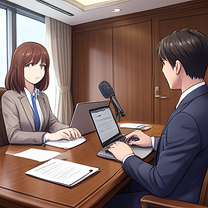
Okay, deep breaths. This is it. I’m in Berlin, trying to build a career, and today I had my first proper job interview – a real, live one – in German. It was terrifying and exhilarating all at the same time. The whole experience was a huge crash course in German business culture, and honestly, a little overwhelming. But I wanted to share it, especially for anyone else who’s just starting out and feeling the same nerves.
The Setup: A Digital Marketing Role
I’d applied for a marketing position at a tech company – let’s call them “Innovate Solutions” – based in Kreuzberg. I’d been studying German for six months, focusing on conversational skills, and this felt like the ultimate test. I’d practiced answering common interview questions in German, but nothing could quite prepare me for the real thing.
The interview was with Herr Müller, the hiring manager, and Frau Schmidt, who seemed to be a team leader. Everything started with the formalities – “Guten Tag, Herr Müller, vielen Dank für Ihre Zeit.” It felt so much more genuine than just saying “Hello, Mr. Müller.” You really feel like you’re acknowledging their authority and respect.
The Conversation Begins: Questions and Answers
The interview started with Herr Müller asking about my experience. He started with the standard questions: “Könnten Sie mir bitte erläern, welche Schwerpunkte Sie bei der Entwicklung Ihrer letzten Kampagnen gesetzt haben?” (Could you please explain which areas you focused on in the development of your last campaigns?). I fumbled a bit trying to translate my English experience into German, realizing how different the phrasing was. I talked about my previous work on social media campaigns, and he kept asking for specifics. I used the word “Kampagne” (campaign) a lot – I think I overused it!
He was really interested in my digital marketing skills, particularly social media advertising and SEO. He kept saying things like, “Das klingt sehr vielversprechend” (That sounds very promising) – and honestly, hearing that gave me a huge confidence boost. I quickly learned that saying something positive and enthusiastic is key.
Teamwork and Collaboration
Then came the questions about my team working skills. “Und wie würden Sie Ihre Stärken in Bezug auf Teamarbeit beschreiben?” (And how would you describe your strengths in teamwork?). This was a tricky one for me. I explained I’m a team player, emphasizing “offene Kommunikation und eine konstruktive Zusammenarbeit” (open communication and constructive collaboration). It felt good to hear Frau Schmidt say they “schätzen diese Eigenschaften sehr” (valued these qualities).
The Vital Question: Sales Team Collaboration
The most challenging question was about working with the sales team. “Haben Sie noch Fragen an mich, bevor wir über die nächsten Schritte sprechen? Ja, ich hätte noch eine Frage: Wie stellen Sie sich die Zusammenarbeit mit unserem Vertriebsteam vor?” (Do you have any questions for me before we talk about the next steps? Yes, I have one question: How do you see working with our sales team?). I realised I needed to be really clear. I suggested “eine enge Abstimmung und regelmäßige Kommunikation” (close coordination and regular communication) to ensure the marketing campaigns were effectively supporting sales. It was a relief when Herr Müller agreed it “war eine ausgezeichnete Antwort” (was an excellent answer).
A Short Break
After a good twenty minutes, they took a “kurze Pause, um die Informationen zu verarbeiten” (short break to process the information). I used this time to try and absorb everything, and honestly, I felt a bit dizzy!
The Wrap-Up
The interview ended politely, with everyone thanking each other. I felt a huge sense of relief – and also a little disappointment that it was over. I said “Schönen Tag noch. Ihnen auch, Frau Schmidt.” (Have a nice day. You too, Mrs. Schmidt.) and “Auf Wiedersehen.” (Goodbye).
What I Learned (And What I Need to Improve)
This interview was brutal, but incredibly valuable. I realized:
- Vocabulary is Key: I need to build my business German vocabulary beyond just “Kampagne” and “Marketing.”
- Phrasing Matters: The way you say things is just as important as what you say. The English phrases just don’t translate directly.
- Preparation is Crucial: I need to practice more complex scenarios, especially those involving collaboration.
- Don’t Be Afraid to Ask for Clarification: It’s okay to ask someone to repeat or rephrase something if you don’t understand. I could have asked “Könnten Sie das bitte wiederholen?” (Could you please repeat that?) earlier when I was struggling with a question.
Despite the nerves, I feel like I made a good impression. I got the feeling they were genuinely interested in my potential. Now, I just need to wait and see if I got the job! I’m already planning my next interview – and this time, I’ll be even more prepared.
- Bonus Tip: I learned that in Germany, even in a formal interview, it’s polite to smile and maintain eye contact. It shows you’re engaged and interested. And maybe, just maybe, start learning a few more common phrases – “Wie geht’s?” (How’s it going?) is always a good icebreaker!


Leave a Reply