
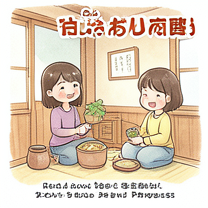
Learn Japanese: Mastering N4 Reading – A Hobby Example
The JLPT N4 is a significant milestone in learning Japanese. This article focuses on building your reading comprehension skills by analyzing a realistic conversation about someone’s hobby. We’ll look at the language used, common mistakes, and strategies to improve.
Introducing the Scenario
Let’s imagine you’re chatting with a friend named Kenji (健二). He recently started learning pottery, and he’s excited to tell you about his progress. This dialogue is designed for an N4 level.
The Dialogue in Japanese (with Romanization)
Kenji: 趣味は陶芸だよ!(Shumi wa tōgei da yo!) – My hobby is pottery!
You: え、陶芸? すごいね!(E, tōgei? Sugoi ne!) – Oh, pottery? That’s amazing!
Kenji: 始めたばかりで、まだ全然上手じゃないんだ。 (hajimetta bakari de, mada zenzen joohen ja nai nda.) – I just started and I’m still not very good.
You: どんなものを作ってるの?(Donna mono wo tsukutte ru no?) – What are you making?
Kenji: 最初は小さな花瓶を作ったよ。 (Saisho wa chiisana kabin o tsukatta yo.) – I made a small vase at first.
You: それは綺麗だね!(Sore wa kirei da ne!) – That’s beautiful!
Kenji: ありがとうございます!でも、先生が教えてくれるから、少しずつ上達してる。(Arigatou gozaimasu! Demo, sensei ga oshiete kureru kara, sukoshi zutsu joo datte iru.) – Thank you! But my teacher is teaching me, so I’m slowly getting better.
You: すごい!頑張ってね!(Sugoi! Ganbatte ne!) – That’s amazing! Good luck!
Vocabulary Breakdown (N4 Level)
- 趣味 (Shumi): Hobby
- 陶芸 (Tōgei): Pottery
- 始めたばかり (Hajimetta bakari): Just started
- 全然 (Zenzen): Not at all, not really
- 上手 (Joohen): Good, skillful
- 作る (Tsukuru): To make
- 花瓶 (Kabin): Vase
- 最初 (Saisho): First
- 少しずつ (Sukoshi zutsu): Gradually, little by little
- 上達する (Joodatsu suru): To improve, to get better
Common Mistakes and Corrections
Mistake 1: Using “ないです” (nai desu) – While grammatically correct, it can sound overly formal for casual conversation. Kenji uses “じゃないんだ” (ja nai nda), which is more natural in this context.
Correction: “まだ全然上手じゃないんだ。”
Mistake 2: Overusing particles like “が” (ga) – While “が” indicates the subject, using it excessively can sound unnatural. Kenji avoids repeating it.
Example of Avoidance: Instead of saying “陶芸が趣味です” (Tōgei ga shumi desu), he says simply “趣味は陶芸だよ” (Shumi wa tōgei da yo).
Tips for Practicing N4 Reading
- Start with Short Texts: Begin with articles and stories specifically designed for the JLPT N4.
- Look Up Unfamiliar Words: Keep a vocabulary notebook and write down new words and their meanings. Focus on high-frequency N4 words first.
- Read Aloud: Reading aloud helps you become familiar with pronunciation and intonation, which is important for understanding spoken Japanese.
- Practice Comprehension Questions: After reading a text, answer comprehension questions to test your understanding.
- Focus on Context: Don’t just translate words; try to understand the overall meaning of the text based on the context.
Resources
Here are some helpful resources for studying for the JLPT N4:
- Takobato – <a href="Read More“>Read More (Excellent for vocabulary and grammar)
- JLPT Official Website – <a href="Read More“>Read More
Consistent practice is key to success! Good luck with your Japanese studies!


Leave a Reply