
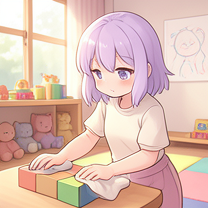
My First Month in a Kita: Learning German Through Cleaning – And a Lot of “Bitte!”
Okay, so here I am. Just three months into living in Berlin, and I’m working as a helper in a Kindertagesstätte – a daycare center. It’s brilliant, exhausting, and completely overwhelming in the best way. I thought I was pretty good at German before I started, having done some online courses, but the reality of actually using it is a whole other ballgame. And honestly, a huge part of my learning has been through the surprisingly detailed world of Kita cleaning protocols. It’s a weird place to start, I know, but it’s given me so much practical vocabulary and, crucially, made me understand how Germans like to be polite – and when they need things done exactly right.
The First Day – “Die Böden müssen gereinigt werden!”
My first day was… chaotic. Little fingers everywhere, bright colours, and a lot of splashing. My supervisor, Frau Schmidt, is a fantastic woman, but she speaks so quickly. The first thing she said, while gesturing to the sticky floor, was: “Die Böden müssen gereinigt werden!” (The floors need to be cleaned!). I froze. I managed a confused, “Ich verstehe nicht?” (I don’t understand?) and she patiently repeated it, slower this time. I realized this was going to be a big one. “Müssen” – “must” – is a really important word. It implies a level of urgency and a need for precision that I hadn’t quite grasped yet. I quickly learned that in a Kita, things aren’t just “cleaned”; they must be cleaned.
Passive Constructions – It’s Not My Fault!
This whole situation really hammered home the importance of passive constructions in German. It’s not just about saying “I clean the floor.” It’s about understanding that the floor might be cleaned for me, or that someone else needs to make sure it’s cleaned.
For example, I was helping to wipe down the tables after snack time. A little boy, Tim, had spilled juice everywhere. Frau Schmidt said, “Die Tische müssen abgewischt werden!” (The tables must be wiped!). I instinctively started wiping, but then she corrected me, saying, “Nein, nein! Du wischst sie ab. Ich kümmere mich um den Dreck!” (No, no! You wipe them. I’ll take care of the mess!). It was a bit of a blow at first – I felt like I was doing something wrong. But it explained so much. The emphasis on must and have to (like müssen, sollen, können) is linked to the passive voice.
Common Phrases for Cleaning Requests
Here are a few phrases I’ve learned that are absolutely essential:
- “Bitte, die Spielzeuge müssen gereinigt werden.” (Please, the toys must be cleaned.) – This is a constant one!
- “Die Wände müssen abgewischt werden.” (The walls need to be wiped.) – Especially after finger painting!
- “Die Böden müssen geputzt werden.” (The floors need to be swept/mopped.) – Very important!
- “Ich kümmere mich um den Dreck.” (I’ll take care of the mess.) – A useful phrase to offer when things get messy.
A Little Misunderstanding (And a Helpful Correction!)
Last week, I was cleaning the bathroom and saw a pile of used paper towels. I thought, “Okay, I’ll just throw these in the bin.” But Frau Schmidt stopped me. “Nein, nein! Die Tücher müssen in den Mülleimer geworfen werden!” (No, no! The towels must be thrown in the bin!). She explained that they had to be disposed of properly – you can’t just chuck them anywhere. She then added, with a smile, “Das ist wichtig für die Hygiene!” (That’s important for hygiene!). It was a simple lesson, but it really drove home the idea that things have to be done correctly for safety reasons.
Small Victories – And A New Word: “Reinigung”
Today, I finished cleaning the entire outdoor play area – sweeping, wiping, and disinfecting everything. Frau Schmidt gave me a thumbs up and said, “Das ist sehr gut gemacht!” (That’s very well done!). I felt an enormous sense of accomplishment. And I learned a new word: Reinigung – cleaning. It’s actually a quite formal word, isn’t it? You hear it a lot in official Kita documents – “Reinigungsprotokoll” (cleaning protocol).
Looking Ahead: More Than Just Cleaning
Honestly, I’m so grateful for this experience. It’s not just teaching me German; it’s giving me a real understanding of German culture – the importance of order, precision, and, of course, Bitte! – please. I know I still have a long way to go, but every time I hear “Die Böden müssen gereinigt werden!” I feel a little more confident, and a little more prepared to handle whatever comes my way in this amazing, chaotic, and incredibly rewarding job. Now, if you’ll excuse me, I need to go make sure the floors are sparkling!


Leave a Reply