
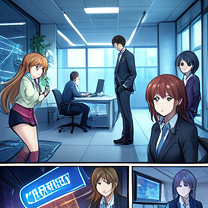
Learning German: A Conversation in the Coffee Shop
My First Steps in Berlin
Okay, so let’s be honest. Moving to Berlin from… well, let’s just say somewhere not Germany was a huge leap. I’d been studying German for a few months online, but actually talking it, really understanding it, that’s been a completely different ballgame. I’m Sarah, and I’m trying to build a life here, and that starts with actually being able to hold a conversation.
Yesterday, I was grabbing a coffee near my apartment in Prenzlauer Berg – you know, the one with the ridiculously good croissants – and I bumped into Markus and Alice. Markus works in IT, and Alice just started a new job at Baumhaus GmbH. It was a really great, slightly chaotic, introduction to the kind of everyday conversations I’m going to be navigating.
“Hallo Markus, wie geht es dir denn heute?”
Markus greeted me with a cheerful, “Hallo Markus, wie geht es dir denn heute?” (Hello Markus, how are you today?). And Alice chimed in, “Hallo Alice, mir geht es gut, danke. Und dir?” (Hello Alice, I’m fine, thank you. And you?). “Mir geht auch gut, danke.” (I’m also fine, thank you.) It felt completely normal, and frankly, a little intimidating.
I managed a shaky, “Mir geht’s auch gut, danke.” (I’m also fine, thank you.) I’m definitely still working on my pronunciation! I quickly realized that “Mir geht’s” is more common and sounds more natural than “Mir geht es.”
The New Job & Career Dreams
Then, Markus started talking about Alice’s new job. “Ich habe mich über deine neue Stelle informiert.” (I’ve heard about your new job). “Oh, wirklich?” (Oh, really?). “Bei der Baumhaus GmbH?” (At Baumhaus GmbH?). He said it sounded “spannend!” (exciting!). Alice confirmed, “Ja, es ist eine Herausforderung, aber ich finde es gut.” (Yes, it’s a challenge, but I like it).
This is where it got really interesting. Markus started asking me about my own career. “Ich wüsste gerne, was du eigentlich von einer beruflichen Veränderung hältst.” (I’d like to know what you think about a career change.) I told him I was considering a change, a große Veränderung (big change). “Ich überlege gerade, ob ich nicht doch etwas Neues machen sollte.” (I’m just thinking about whether I should do something new).
Wishing for More Variety
He asked, “Es wäre schön, wenn die Aufgaben mehr Abwechslung hätten.” (It would be nice if the tasks had more variety). I completely understood that! I find myself sometimes wishing my current job had a bit more variety. “Ich hätte mir gewünscht, dass die Firma mich eher in den Bereich Projektmanagement einbinden würde, aber das scheint schwierig zu sein.” (I wish the company would involve me more in the project management area, but it seems difficult.)
Needs and Wants – A Realistic Conversation
But then Alice jumped in. “Das verstehe ich.” (I understand). “Aber wenn ich so überlege, wünschte ich, dass die Verantwortlichen die Situation besser einschätzen würden und mehr Möglichkeiten für Weiterbildung anbieten würden.” (But if I think about it, I wish the decision-makers would better assess the situation and offer more opportunities for further training). It was a really insightful observation. It’s not just about having different tasks; it’s about feeling valued and having opportunities to grow. “Das stimmt.” (That’s true).
Bureaucracy and Motivation
We talked about how annoying it is when processes are too bürokratisch (bureaucratic). “Wenn die Prozesse weniger bürokratisch wären, wäre das natürlich ideal.” (If the processes were less bureaucratic, that would be ideal). “Ich stelle mir vor, dass die Firma sich mehr Mühe geben könnte, die Mitarbeiter zu fördern, wenn sie die Vorteile auch selbst erkennen würden.” (I imagine the company could try harder to support its employees if it recognized the benefits itself). It’s a bit of a chicken and egg situation, isn’t it?
A Call for Investment in Employees
Alice continued, “Ich hätte mir gewünscht, dass die Unternehmensführung den Bedarf an Weiterbildung aktiv forscht und entsprechende Angebote macht.” (I wished that the management would actively research the need for further training and make corresponding offers). “Vielleicht wäre es besser, wenn die Aufgaben passiv an mich übertragen würden, damit ich mich besser einarbeiten könnte.” (Maybe the tasks should be passed to me passively so that I can get better acquainted). “Das wäre natürlich eine gute Lösung.” (That would be a good solution).
Suggesting Collaboration and Support
Markus then suggested, “Vielleicht sollten wir uns mal darüber austauschen, welche Fähigkeiten wir denn verbessern könnten, wenn du das wüsstest.” (Maybe we should talk about which skills we could improve if you knew). “Sehr gerne! Ich könnte dir ein paar Tipps geben, wenn du mal Unterstützung brauchst.” (Very gladly! I could give you some tips if you need any support).
It was a really encouraging offer, and I realized I need to be more proactive about asking for help. “Vielleicht hätten wir ja eine gemeinsame Weiterbildung.” (Maybe we could have a joint further training). “Das wäre toll!” (That would be great!).
Setting Up Regular Conversations
Finally, Markus suggested, “Ich denke, wir sollten uns regelmäßig austauschen, um über unsere beruflichen Ziele zu sprechen.” (I think we should exchange information regularly to discuss our professional goals). “Auf jeden Fall!” (Definitely!).
My Takeaway: Starting Small
This conversation was incredibly helpful. It was a reminder that just talking in German, even about something as personal as career aspirations, is a massive step. I need to keep practicing, keep listening, and don’t be afraid to make mistakes – Fehler sind wichtig! (Mistakes are important!). I’m going to start using the phrases I learned – “Mir geht’s gut, danke.”, “Ich wüsste gerne…” – and try to build more conversations like this. Who knows, maybe a joint further training course is on the cards!
Key Phrases to Remember:
- Mir geht es… (I’m… )
- Ich wüsste gerne… (I would like to know…)
- Es wäre schön, wenn… (It would be nice if…)
- Das verstehe ich. (I understand).
- Ich habe mich informiert. (I’ve been informed)


Leave a Reply