
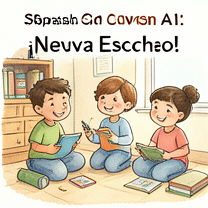
Learning Spanish with ‘Nueva Escuela’: A Practical Guide to A1
Starting a new language is a wonderful achievement, and ‘Nueva Escuela’ offers an approachable method focused on practical conversation. This guide explores how a learner can effectively utilize the ‘Nueva Escuela’ approach for achieving a foundational level of Spanish – specifically, the A1 (Beginner) stage.
Understanding ‘Nueva Escuela’
‘Nueva Escuela’ centers around building basic communicative skills quickly. The program emphasizes immediate use of learned phrases in realistic scenarios. Unlike approaches that heavily focus on grammar rules initially, it prioritizes what a learner needs to say and understand immediately. The course materials often utilize role-playing exercises and short dialogues simulating everyday interactions.
Essential Vocabulary for A1 – Day 1
A good starting point is understanding some core vocabulary related to introductions and basic needs. Here are key phrases, with pronunciation hints:
- Hola (O-la): Hello
- Buenos días (BWEH-nos DEE-as): Good morning
- Buenas tardes (BWEH-nas TAR-des): Good afternoon/evening
- Buenas noches (BWEH-nas NO-ches): Good night
- ¿Cómo está? (KOH-mo es-TAH?): How are you? (Formal)
- Me llamo… (Meh YAH-mo…): My name is…
- Mucho gusto (Moo-cho GOOS-to): Nice to meet you
A common mistake at this stage is forgetting the question mark after a question. It’s essential! Correctly, it’s “¿Cómo está?” not “¿Cómo esta?”.
Practical Dialogues – Role-Playing Scenarios
‘Nueva Escuela’ thrives on practicing dialogues. Here are some scenarios a learner might encounter:
Scenario 1: At a Café
Barista: “Hola, ¿qué desea?” (O-la, keh des-AY-ah?) – Hello, what would you like?
Customer: “Quiero un café, por favor.” (Kee-EH-rohn oon kah-FEH, poor fah-VOR) – I want a coffee, please.
Barista: “¿Algo más?” (AH-loh mas?) – Anything else?
Customer: “No, gracias.” (No GRA-theas.) – No, thank you.
Scenario 2: Asking for Directions
Visitor: “¿Dónde está la estación de tren?” (DON-deh es-TAH la es-tah-SEE-ohn deh tren?) – Where is the train station?
Local: “Siga derecho, y luego gire a la derecha.” (See-gah der-EHCH-to, ee loo-ehn gee-reh ah la der-EHCH-ta) – Go straight and then turn right.
Tips for Success with ‘Nueva Escuela’
- Focus on Listening: Actively listen to the audio materials repeatedly. Mimic the pronunciation as closely as possible.
- Repeat, Repeat, Repeat: Don’t be afraid to say phrases aloud, even if you make mistakes. Practice makes perfect.
- Don’t Overthink Grammar: Initially, concentrate on understanding the meaning of the conversation rather than dissecting every grammatical rule.
- Use Flashcards: Create flashcards with vocabulary words and phrases for quick review.
- Engage in Simple Conversations: If possible, find a language partner or tutor to practice conversational Spanish – even just basic greetings are helpful.
Learning Spanish is an investment of time and effort. ‘Nueva Escuela’ provides a structured approach focusing on getting learners speaking from day one. With consistent dedication, a learner can successfully reach the A1 level and begin confidently navigating simple conversations in Spanish.


Leave a Reply