
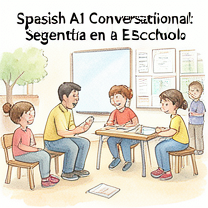
Spanish A1: Seguridad en la Escuela (Safety in the School)
Learning a new language can be daunting, but starting with basic conversations is key. This article focuses on building confidence and practical skills related to safety within a school environment – a very common scenario for beginners. We’ll explore phrases and vocabulary that someone might actually use when interacting with teachers, classmates, and school staff.
Introduction: A New Student
Imagine a new student, Mateo, arriving at his first day of Spanish lessons. He’s nervous but excited. Understanding basic greetings and safety information will help him feel more comfortable. The goal here is not perfect pronunciation or flawless grammar; it’s about being able to communicate effectively.
Useful Phrases & Vocabulary
Here’s a breakdown of essential phrases, with their Spanish equivalents:
- Hello / Good morning: Hola / Buenos días
- Good afternoon: Buenas tardes
- Good evening: Buenas noches
- My name is…: Me llamo…
- What’s your name?: ¿Cómo te llamas? (informal) / ¿Cómo se llama? (formal – used with teachers)
- Please: Por favor
- Thank you: Gracias
- Excuse me: Perdón / Disculpe
- I don’t understand: No entiendo
- Help!: ¡Ayuda!
A Dialogue: Asking for Help
Let’s look at a simple dialogue between Mateo and Señora Elena, his Spanish teacher. A learner would benefit from understanding how these phrases naturally flow.
Mateo: Hola, Señora Elena. Me llamo Mateo.
(Mateo: Hello, Ms. Elena. My name is Mateo.)
Señora Elena: ¡Hola, Mateo! Bienvenida a la clase. ¿Cómo estás?
(Ms. Elena: Hello, Mateo! Welcome to the class. How are you?)
Mateo: Estoy bien, gracias. No entiendo algo.
(Mateo: I’m fine, thank you. I don’t understand something.)
Señora Elena: ¿Qué no entiendes? (informal) / ¿Qué no entiende? (formal – more appropriate for a teacher)
(Ms. Elena: What don’t you understand?)
Mateo: No entiendo el baño. ¿Dónde está el baño, por favor?
(Mateo: I don’t understand the bathroom. Where is the bathroom, please?)
Señora Elena: El baño está a la derecha, al final del pasillo.
(Ms. Elena: The bathroom is to the right, at the end of the hallway.)
Mateo: ¡Gracias!
(Mateo: Thank you!)
Common Mistakes & Corrections
A learner might make mistakes like saying “¿Cómo te llamas tú?” (literally “How do you call yourself – you”). While technically correct, using just “¿Cómo te llamas?” is more natural. Another common error is forgetting the ‘por favor’ when asking for directions; always add it to be polite.
Safety Tips & Phrases
Here are some phrases useful for safety situations:
- I need help: Necesito ayuda
- There’s an accident!: ¡Hay un accidente!
- Call the police/ambulance!: Llamen a la policía/ambulancia!
Conclusion
This initial exploration of “Seguridad en la Escuela” provides a foundation for building conversational Spanish skills. Focus on practicing these phrases and dialogues aloud to gain confidence. Remember, communication is more important than perfect grammar at this stage. Consistent practice and willingness to make mistakes are vital to successful language learning.


Leave a Reply