
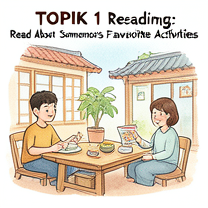
Learning Korean Through TOPIK 1 Reading: Understanding Someone’s Favorite Activities
This article focuses on a common and effective way to build your Korean reading comprehension skills – practicing with materials designed for the TOPIK 1 level. We’ll be looking at short texts about everyday activities, focusing on understanding basic vocabulary and sentence structures.
What is TOPIK 1 Reading?
The Test of Proficiency in Korean (TOPIK) is a standardized test to assess Korean language proficiency. TOPIK 1 focuses on foundational communication skills – primarily listening and reading. Materials designed for this level are intentionally simple, typically using common vocabulary and straightforward grammar patterns you’ll find in everyday conversations.
Finding Suitable Reading Material
You can find many free TOPIK 1 reading passages online. Search terms like “TOPIK 1 reading practice” or “Korean reading comprehension level 1” will yield results. Look for texts that focus on hobbies, daily routines, or simple descriptions of things people do.
Example Text: My Favorite Activities
Let’s imagine a short text about someone’s favorite activities. Here it is:
“안녕하세요! 제 이름은 민수예요. 저는 영화 보는 것을 제일 좋아해요. 그리고 책 읽는 것도 좋아요. 주말에는 친구와 맛있는 거 먹으러 가요. 운동도 해요. 매일 아침 8시에 일어나서 영어 공부를 해요.”
(Annyeonghaseyo! Je ireum-eun Minsu-yeyo. Jeoneun yeonghwa bonneun geotjogeul jejeol joahaeoyo. Geurido chaek ilgunneun gotjugeos yo juseyo. Jubeumal-eoneun chinguga masinneun geo meogeureo gayo. Munondo haeyo. Maeil achim 8시에 iraneoseo yeongeo gongbu-reul haeoyo.)
(Hello! My name is Minsoo. I love watching movies the most. And reading books are good too. On weekends, I go out with friends to eat delicious food. I also do exercise. Every morning at 8 o’clock, I study English.)
Vocabulary Breakdown
Let’s break down some of the key vocabulary:
- 안녕하세요 (Annyeonghaseyo) – Hello
- 제 이름은 (Je ireum-eun) – My name is
- 민수예요 (Minsu-yeyo) – Minsoo (ending particle)
- 영화 (Yeonghwa) – Movie
- 보는 것을 (Boneun geotjogeul) – Watching (it)
- 제일 좋아해요 (Jejeol joahaeoyo) – I like the most
- 책 (Chaek) – Book
- 읽는 것도 (Ilgunneun gotjugeos) – Reading (it) too
- 주말에는 (Jubeumal-eoneun) – On weekends
- 친구와 (Chinguga) – With friends
- 맛있는 거 (Masinneun geo) – Delicious food
- 먹으러 가요 (Meogeureo gayo) – I go to eat
- 운동도 해요 (Munondo haeyo) – I also do exercise
- 매일 아침 (Maeil achim) – Every morning
- 8시에 (8-sye) – At 8 o’clock
- 일어나서 (Irunaseo) – Getting up
- 영어 공부를 해요 (Yeongeo gongbu-reul haeoyo) – I study English
Common Mistakes and Corrections
New learners often make mistakes with word order. Korean is generally Subject-Object-Verb. Notice how “저는 영화 보는 것을 제일 좋아해요” translates to ‘I watching movie the most like’. It might sound awkward in English, but that’s the natural flow of Korean.
Another common mistake is using the wrong ending particles (like -요). Pay attention to these particles as they are crucial for correct grammar.
Practicing Reading
1. Read Aloud: Saying the text aloud helps you become familiar with the pronunciation and sentence structure.
2. Look Up Unknown Words: Don’t be afraid to use a Korean dictionary (online or physical).
3. Try to Summarize: After reading, try summarizing the passage in your own words – even if it’s just one or two sentences.
Resources
Here are some resources you might find helpful:
- Duolingo (Korean Course)
- Memrise (Korean Vocabulary Courses)
- Talk To Me In Korean (Website & App – Lessons and Practice Materials)

Leave a Reply