
JLPT N5 Reading Practice: A Simple Workplace Introduction
This article will help you practice reading simple Japanese texts designed for the JLPT N5 level. We’ll focus on a realistic workplace scenario – an introduction between colleagues. Don’t worry about complex grammar; we’re aiming for clear communication.
The Scenario
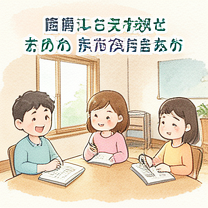
You’ve just started a new job at a small company. Your colleague, Hiroki-san, is introducing himself and asking you how you are. This is a common introductory situation in Japanese workplaces.
Dialogue & Vocabulary
Here’s the dialogue between you (あなた – anata) and Hiroki-san (広樹さん – hiroki-san):
You: こんにちは!(Konnichiwa!) どうぞよろしくお願いします。(Douzo yoroshiku onegaishimasu.)
(Hello! Nice to meet you. Please treat me well.)
Hiroki-san: こんにちは!私は広樹です。(Konnichiwa! Watashi wa Hiroki desu.)
(Hello! I’m Hiroki.)
Hiroki-san: 会社では、田中さんと一緒に働いています。(Kaisha de wa, Tanaka-san to issho ni hataraite imasu.)
(At the company, I work with Mr. Tanaka.)
Hiroki-san: あなたは? (Anata wa?)
(And you? / What’s your name?)
You: 私は[Your Name]です。(Watashi wa [Your Name] desu.)
(I am [Your Name].)
Hiroki-san: お元気ですか? (Ogenki desu ka?)
(How are you? / Are you well?)
You: ええ、おかげさまで元気です。(Ee, okagesama de genki desu.)
(Yes, I’m fine, thanks to everyone/goodness.)
Vocabulary Breakdown
- こんにちは (Konnichiwa): Hello (used during the daytime)
- どうぞよろしくお願いします (Douzo yoroshiku onegaishimasu): Please treat me well / Nice to meet you. – A standard polite phrase for introductions. It’s a little hard to translate directly, but it conveys sincerity.
- 私 (Watashi): I
- は (wa): Topic marker – indicates the subject of the sentence.
- です (desu): Polite form of “to be” – used to make statements.
- 会社 (Kaisha): Company
- だ (da): Casual form of “desu” – often used between close colleagues.
- さん (san): Title for Mr./Ms.
- 一緒に (issho ni): Together
- あなた (anata): You
- 元気 (genki): Healthy / Well
- ですか (desu ka): Question marker – makes a statement into a question.
- お元気ですか?(Ogenki desu ka?): How are you?
- おかげさまで (Okagesama de): Thanks to everyone / Due to kindness – Used when responding to “How are you?” showing gratitude for good health or fortune.
Common Mistakes & Corrections
Mistake: Saying just “Genki” without the question marker. Japanese requires a question marker when asking about someone’s well-being.
Correction: お元気ですか?(Ogenki desu ka?)
Mistake: Using “Anata” too casually with someone you’ve just met. While it means “you,” it can come across as abrupt.
Better Alternative: Instead of 私はあなたは何ですか?(Watashi wa anata wa nan desu ka?), it’s more polite to say お元気ですか? (Ogenki desu ka?)
Practice Exercise
Imagine you are the “You” in the dialogue. Write out your responses to Hiroki-san’s questions, using the vocabulary and phrases learned above.
Example Response: こんにちは!私は[Your Name]です。お元気ですか? ええ、おかげさまで元気です。


Leave a Reply