
My First Time at the Krankenhaus – And Why German Hospital Phrases Matter for B1.1
Okay, so here I am, almost six months in Berlin, and let’s be honest, navigating everyday life is… challenging. But I’m pushing myself, and I’m really focusing on my German. Yesterday, I actually had a practical experience that felt incredibly relevant – I had to go to the hospital. And it wasn’t just a quick visit; I spent a good hour in the reception area waiting to see a doctor. It made me realize just how important actually using the language is, and how much I need to get to a B1.1 level for situations like this. This experience felt super real, and it’s completely shaped how I’m approaching my studies now.
The Waiting Room – A World of Nervousness and German
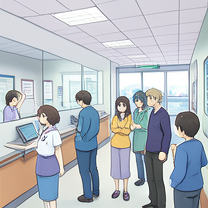
The reception area itself was pretty typical – plastic chairs, a flickering fluorescent light, and a huge line of people. Everyone looked a little stressed, and honestly, I was too. I had a slight cough that wouldn’t go away, and I knew the German healthcare system could be… well, let’s just say efficient. The first thing I did was just observe. A woman in front of me was talking to the receptionist, Frau Schmidt.
- Frau Schmidt: “Guten Tag, ich habe einen Termin für meinen Sohn. Er hat seit gestern Kopfschmerzen.” (Good day, I have an appointment for my son. He has had headaches since yesterday.)
- Frau: “Danke, bitte geben Sie mir die Krankenkassenkarte.” (Thank you, please give me the health insurance card.)
It was so simple, but I froze. I knew should have said “Krankenkassenkarte,” but my brain just blanked. I mumbled, “Ich… ich habe die Karte?” (I… I have the card?) Frau Schmidt smiled patiently and said, “Kein Problem, bitte nur die Karte zeigen.” (No problem, just show me the card.) That was my first little wobble. I quickly pulled out my Karte and showed it to her. It felt incredibly embarrassing, but she was lovely.
Key Phrases You Need to Know (And Why They Matter)
This whole experience hammered home a few key phrases I need to master. It’s not just about knowing the words; it’s about using them confidently. Here’s what I took away:
- “Ich habe einen Termin.” (I have an appointment.) – Absolutely essential. I need to be able to book appointments and confirm them.
- “Ich habe Kopfschmerzen/Ein Fieber/… ” (I have a headache/A fever/…) – Basic symptom descriptions are crucial, especially when you’re feeling unwell.
- “Wie lange muss ich warten?” (How long do I have to wait?) – Let’s be honest, we all want to know! I mumbled this when I finally got to the front of the queue.
- “Bitte geben Sie mir…” (Please give me…) – Used when asking for documents or information.
- “Kann ich die Karte/das Formular bitte sehen?” (Can I see the card/the form, please?) – This is a crucial question to ask.
Misunderstandings and Correction – It Happens!
After a while, a young man was asking for his father. He was a little flustered.
- Young Man: “Entschuldigung, mein Vater ist noch nicht da?” (Excuse me, is my father still not here?)
- Frau Schmidt: “Bitte warten Sie einen Moment, Herr Müller. Ich rufe Sie an, wenn er da ist.” (Please wait a moment, Mr. Müller. I’ll call you when he’s here.)
The young man then started repeating the same question several times, becoming increasingly agitated. Frau Schmidt calmly explained the process again. It was a moment of pure chaos – I felt a little sympathy for him and a huge wave of relief that I was just observing. It highlighted the importance of patience (something I’m still working on!) and the ability to repeat yourself clearly. I realized that I needed to focus on speaking slower and more deliberately when I’m stressed.
My Next Steps – Practical Application for B1.1
This hospital visit was a game-changer. I’m going to start actively practicing these phrases with my language partner, Lena. We’re going to role-play scenarios – booking appointments, explaining symptoms, asking about wait times. I’m also going to write down common phrases and put them on my fridge – a constant reminder. I’m aiming for that B1.1 level not just for the grammar, but for the genuine confidence to handle real-life situations, like navigating the German healthcare system. It’s about feeling comfortable and competent, and frankly, that’s what makes living here a little less stressful. I’m hoping this experience will help me feel a bit more prepared for my next appointment! Ich bin gespannt! (I’m excited!)


Leave a Reply