
My First Weekend in Berlin: Learning German One Conversation at a Time
It’s still pretty early in my time here in Berlin, and honestly, some days I feel like I’m wading through a sea of German. But you know what? It’s also incredibly exciting. I’m living here as a freelance graphic designer, and it’s a huge step, but navigating everything – from ordering coffee to figuring out the bus routes – is…well, a learning curve! This weekend started with a surprisingly helpful conversation that’s given me a little boost of confidence.
A Chance Encounter at the Bahnhof
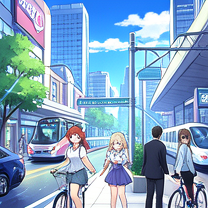
It all started with “Guten Tag! Hast du schon Pläne für das Wochenende?” (Good day! Do you have any plans for the weekend?) A girl named Alice was chatting with me at the main train station – the Bahnhof – waiting for a train. I just mumbled a “Ja, nicht wirklich” (Yes, not really) and she asked, “Fahrrad fahren klingt gut!” (Cycling sounds good!). I told her I was actually going to the Bahnhof to visit my Oma (Grandma).
Finding Out Where Oma Lives
Then she asked, “Oh, das ist lieb! Wo wohnt deine Oma denn genau?” (Oh, that’s nice! Where does your Oma live exactly?). I hesitated, feeling a bit awkward. I explained she lived near the Bahnhof, specifically in Bahnhofstraße. It’s a classic Berlin street – lots of shops, and really, really busy. I realized I hadn’t actually thought about how to explain my address in German!
I managed to say, “Ich fahre immer mit dem Zug, weil es schneller ist als mit dem Fahrrad.” (I always take the train because it’s faster than by bicycle). Alice understood perfectly. It’s amazing how much you pick up just by listening and trying to respond.
The Zug and Luggage Woes
We continued chatting and she asked, “Ich muss auch oft mit dem Zug fahren, besonders wenn es regnet.” (I often have to take the train, especially when it rains.) It makes a lot of sense – the weather here is… unpredictable! But then she brought up a common frustration: “Aber es ist manchmal so schwierig, Gepäck zu transportieren.” (But it’s sometimes so difficult to transport luggage).
She’s completely right! I have this huge suitcase – seriously, it’s enormous – and trying to wrestle it onto the train is always a battle. I know I need to start packing lighter!
New Zugabteile – A Potential Solution?
Then she said, “Ja, das stimmt. Ich habe gehört, dass es neue Zugabteile gibt, die mehr Platz bieten.” (Yes, that’s true. I’ve heard there are new train compartments that offer more space). “Wirklich?” (Really?) I asked, genuinely interested. “Das wäre super!” (That would be great!).
My suitcase feels like a permanent fixture in my life right now. I desperately hope these new compartments get built soon! I wish there was more space to sit, too. “Ich glaube, das wäre eine gute Idee!” (I think that would be a good idea!) I said, hoping she’d agree.
A Little Misunderstanding (and a Helpful Correction!)
She laughed and said, “Ja, vielleicht! Aber du musst ‘Abteile’ sagen – it’s ‘Abteile,’ not ‘Abteil’!” (Yes, maybe! But you have to say ‘Abteile’ – it’s ‘Abteile,’ not ‘Abteil’!).
That’s the thing, isn’t it? The little differences can throw you. I realized I was trying to say “Abteil” as if it were a verb! She patiently corrected me, and honestly, it felt like a huge victory. It’s not just about knowing words; it’s about getting the right word.
Moving Forward – One Conversation at a Time
This simple conversation with Alice has given me a lot of motivation. It’s clear that making mistakes is part of the process, and that people here are generally patient and willing to help. I’m starting to feel a little less overwhelmed and a little more confident.
My next goal is to learn how to order a coffee correctly – “Einen Cappuccino, bitte!” (A cappuccino, please!). Wish me luck! And if you’re ever in Berlin, say hi to Alice for me.
—
Useful German Phrases to Remember:
- Guten Tag! – Good day!
- Hallo! – Hello!
- Wie geht es dir? – How are you?
- Mir geht es gut, danke. – I’m fine, thank you.
- Ich verstehe nicht. – I don’t understand.
- Könnten Sie das bitte wiederholen? – Could you please repeat that?
- Danke! – Thank you!


Leave a Reply