
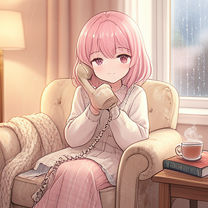
My First German Phone Calls: Getting the Hang of Polite Questions
Okay, so here I am, six months in Berlin, and let’s be honest, the biggest hurdle isn’t learning the complicated grammar – it’s talking to people. I’ve mastered ordering a coffee (“Ein Cappuccino, bitte!”) and asking for directions (“Wo ist die U-Bahn?”), but actually initiating a phone call? Terrifying. It feels like I’m throwing a verbal grenade into the conversation. But I’m getting there, slowly but surely. And a big part of that is tackling those polite questions – they’re the key to actually getting what I need.
The Initial Panic – And the “Entschuldigung?”
The first few times, it was pure chaos. I’d pick up the phone, immediately start talking, and then freeze, realizing I hadn’t introduced myself properly. It always started with a frantic, “Hallo? Wer ist da?” (Hello? Who’s there?). I learned very quickly that this isn’t exactly a welcoming greeting. My colleague, Markus, patiently explained, “You need to say ‘Entschuldigung’ first. It’s like saying ‘Excuse me’ in English.” He gave me an example: “Entschuldigung, Herr Schmidt? Bin ich Ihnen recht?” (Excuse me, Mr. Schmidt? Am I speaking to you?). It sounds so formal, doesn’t it? But it’s crucial. I still stumble over it, but I’m trying.
Asking About Appointments – “Haben Sie…? “
One of the biggest frustrations is making appointments. I booked a dentist appointment last week, and the receptionist, Frau Müller, kept asking me things I didn’t understand. She’d say, “Haben Sie einen Termin am Dienstag?” (Do you have an appointment on Tuesday?) and I’d just panic and start babbling about fillings. Markus taught me to respond politely and clarify. Instead of just saying “Ja” or “Nein,” I started with: “Entschuldigung, ich habe keinen Termin am Dienstag. Haben Sie noch andere Termine?” (Excuse me, I don’t have an appointment on Tuesday. Do you have any other appointments?). It’s so much clearer, and it shows I’m actually listening and trying to understand. I also learned to write down the date and time they offered me – just in case I got confused.
Common Phrases & How They Actually Sound
Let’s look at some other useful phrases I’ve picked up, and honestly, how they sound in practice. It’s not always textbook perfect:
- “Wie bitte?” (How please?) – This is essential. I use it constantly when I don’t understand something. I actually feel a bit silly saying it, but it’s far better than just nodding and pretending to understand. Last week, Frau Müller said something about “die Abrechnung” (the invoice) and I blurted out, “Wie bitte?” She just smiled and repeated it slowly.
- “Könnten Sie das bitte wiederholen?” (Could you please repeat that?) – This is my go-to when I’ve completely lost the thread. Again, it sounds a little dramatic, but it works!
- “Vielen Dank” (Thank you very much) – I always, always say this at the end of a call, even if it was short and simple. It feels polite.
A Mini-Disaster – And What I Learned
Last week, I was trying to call the bakery to order a cake for a friend’s birthday. I was feeling confident, and I started with, “Guten Tag! Ich möchte einen Kuchen bestellen!” (Good day! I would like to order a cake!). Then, I completely blanked on the type of cake I wanted, and just said, “Einen Kuchen!” (A cake!). The baker, Herr Schmidt, looked utterly bewildered. He asked, “Welchen Kuchen möchten Sie?” (What kind of cake would you like?) I stammered, “Ich weiß nicht!” (I don’t know!). It was mortifying. Markus explained that I needed to be more specific. He said, “Always ask for clarification. It shows you’re interested.” I’ve made a mental note – and a very visible one in my notebook – to write down the cake type before I even pick up the phone!
Small Victories, Big Improvements
Despite the moments of panic and the occasional misunderstanding, I’m starting to feel more comfortable. I still make mistakes, I still stumble over my words, and I definitely still use “Wie bitte?” far too often. But I’m actually managing to have simple, polite phone conversations. And that, I think, is a huge step forward. Now, if you’ll excuse me, I need to go practice saying “Haben Sie einen Termin?” one more time… “Entschuldigung, Herr Schmidt? Bin ich Ihnen recht?” (Excuse me, Mr. Schmidt? Am I speaking to you?).

Leave a Reply