
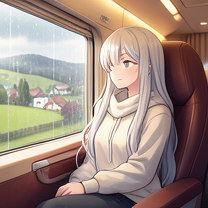
Mastering German on the Rails: My Adventures with the DB and ICE
Okay, so moving to Berlin was… a lot. Everything is amazing, the food is incredible, and the culture is fascinating. But let me tell you, trying to navigate it all, especially getting around, felt completely overwhelming at first. I’d spent months studying German, but it felt so different when I was actually using it, particularly when I needed to buy a train ticket or ask for directions. It wasn’t just about knowing words; it was about understanding the flow of conversation and dealing with the practicalities of daily life. My biggest breakthrough, and honestly, the most fun way to improve my German, has been learning through train travel with the Deutsche Bahn (DB) and their high-speed ICE trains.
First Impressions: The DB App and Buying Tickets
The first time I tried to buy a ticket online, I was utterly lost. The DB app – Die Bahn – looked incredibly complicated. All these buttons and dropdowns! I finally managed to fumble my way to “Fahrkarten kaufen” (buy tickets), but even then, the options were terrifying. I ended up asking a colleague, Sarah, who was a native speaker, for help. She quickly showed me how to select my destination and the number of people travelling.
“Schau mal, du musst hier die Anzahl der Personen eintragen,” she said, pointing to a field. (Look, you have to enter the number of people here.) I realised I’d been trying to type in “zwei” (two) instead of just clicking the number. Small mistakes, huge frustrations! I learned to always double-check the number of passengers. It’s still a massive source of anxiety – Wie viele Personen sind das? (How many people are that?).
Asking for Directions and Ticket Information – Question Forms are Key!
Asking for help is definitely part of the experience, and the DB staff are generally very helpful, though sometimes a bit rushed. The biggest difference I noticed was how frequently I used question forms. I kept accidentally trying to make statements instead of asking.
For example, instead of saying “Entschuldigung, wo ist die Toilette?” (Excuse me, where is the toilet?), I blurted out “Die Toilette ist hier?” (The toilet is here?). That got me more confused looks! I quickly learned to add “ist” (is) to the end of a sentence to make it a question. It’s surprisingly basic, but so important.
Another time, I asked a station attendant, “Kann ich bitte einen ICE nach München bekommen?” (Can I please get an ICE to Munich?). He responded with “Ja, natürlich! Wie viele Personen?” (Yes, of course! How many people?). I realised I hadn’t actually asked for the ticket; I’d just stated my intention. I quickly corrected myself and asked, “Ich möchte bitte einen ICE nach München kaufen.” (I would like to buy an ICE to Munich).
Travel Vocabulary: Beyond “Zug” and “Ticket”
Obviously, you need to know the basics: Zug (train), Ticket (ticket), Bahnhof (station), Fahrkarte (ticket). But there’s so much more useful vocabulary.
- Abfahrt (departure) – “Wann ist die Abfahrt nach Hamburg?” (When is the departure to Hamburg?)
- Ankunft (arrival) – “Wann ist die Ankunft in Berlin?” (When is the arrival in Berlin?)
- Verzögerung (delay) – “Es gibt eine Verzögerung!” (There’s a delay!) – I once sat stranded for an hour due to a signal problem – a very stressful experience!
- Wartebereich (waiting area) – I spent a lot of time in the Wartebereich, trying to understand announcements.
- Gepäck (luggage) – I learned the hard way to always have a printed copy of my baggage claim tag – Ich habe mein Gepäck verloren! (I lost my luggage!).
The ICE – A Different Experience
The ICE trains themselves are fantastic. They’re so much smoother and faster than I expected! But even on the ICE, I had to practice my German. I asked a fellow passenger, a retired teacher named Klaus, for directions to the next stop.
“Entschuldigen Sie, könnten Sie mir sagen, wann der nächste Zug nach Frankfurt fährt?” (Excuse me, could you tell me when the next train to Frankfurt departs?) He patiently explained the schedule, using terms like Verbindungsverbindung (connecting connection) and Richtung (direction). I was immensely grateful for his help and managed a small “Vielen Dank!” (Thank you very much!).
My Biggest Lesson: Don’t Be Afraid to Make Mistakes!
Honestly, I’ve made so many mistakes. I’ve ordered the wrong coffee, asked for directions to the wrong place, and completely butchered conversations. But you know what? Everyone is incredibly patient and understanding. They appreciate the effort I’m making to speak their language. The DB and ICE have become my best teachers. Each awkward conversation, each slightly mispronounced word, is helping me build confidence and fluency.
Now, if you’ll excuse me, I need to go buy a ticket – Bitte, eine Fahrkarte nach Potsdam, bitte! (Please, a ticket to Potsdam, please!). Los geht’s! (Let’s go!).


Leave a Reply