
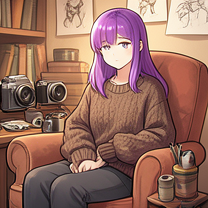
My Journey into German Art & Photography Conversations
Okay, so here I am, six months in Berlin. I’ve moved here for work – a slightly ridiculous job in logistics, honestly – but it’s given me a massive excuse to actually try to immerse myself, and let me tell you, it’s been… a challenge. Specifically, I’ve been utterly obsessed with art and photography, and discovering how to talk about it all in German. It’s not just about knowing words; it’s about understanding the way Germans talk about these things. And believe me, it’s different.
First Impressions: The Kunsthaus & That Awkward Conversation
The first place I went was the Hamburger Kunsthalle. It was incredible – so much to see! I was staring at this huge painting by Max Ernst, all swirling colours and distorted shapes, and I wanted to tell someone, anyone, what I thought. I spotted a man sketching in a notebook and approached him.
“Entschuldigen Sie,” I started, feeling ridiculously nervous, “Ich finde dieses Gemälde… sehr interessant.” (Excuse me, I find this painting… very interesting.)
He looked up, a little surprised, and replied, “Ja, es ist ein Meisterwerk!” (Yes, it’s a masterpiece!). I wanted to say something more, to explain why I found it interesting, but I froze. My German vocabulary suddenly felt completely inadequate. I blurted out, “Ich mag die Farben!” (I like the colors!), which felt incredibly basic. He smiled politely, and we just stood there for a moment. It was a good reminder that sometimes, simple appreciation is enough.
Essential Phrases for Art Discussions
Let’s get into some actual phrases I’ve found useful. It’s not just about saying “I like it.”
- “Was halten Sie von…?” (What do you think of…?) – This is your go-to for getting someone’s opinion.
- “Ich finde… sehr…” (I find… very…) – This is flexible. You can use interessant, schön, gut, schlecht (bad!), bedrohlich (threatening) – whatever fits.
- “Das finde ich besonders….” (I particularly like…) – Useful for pointing out specific elements.
- “Was bedeutet das?” (What does it mean?) – Great for asking about the symbolism or intention behind a piece. I asked a gallery assistant about a sculpture at KW Institute and they explained the artist was commenting on consumerism. “Das ist sehr tiefgründig!” (That’s very profound!).
Photography – A Different Kind of Conversation
Talking about photography felt a little… different. It’s less about emotional response and more about the technical aspects, at least initially. I took a photography course last month at a local studio, and the instructor, Steven, constantly corrected my German.
“Du sagst ‘Das ist ein gutes Foto’,” he said, frowning slightly. “It’s too general. Use ‘Die Schärfe ist gut’ (The sharpness is good) or ‘Die Belichtung ist korrekt’ (The exposure is correct). Understand the difference?” He was right, of course. “Gutes Foto” just means “good picture.”
I also learned that Germans are very precise when talking about camera settings. “Die ISO ist zu hoch!” (The ISO is too high!) – it’s a serious thing. I’ve also heard people say, “Der Tiefenschärfe ist perfekt!” (The depth of field is perfect!).
Common Misunderstandings & My Oops Moments
Okay, this is important. I completely misinterpreted something last week. I was talking to a friend, Michael, about a street photographer I’d seen. I said, “Die Fotos sind sehr… spontan!” (The photos are very… spontaneous!) Michael looked horrified. Apparently, “spontan” can sound a bit dismissive in this context. It’s like saying, “They’re just randomly snapping pictures.” He explained that I should have said, “Die Fotos sind sehr natürlich” (The photos are very natural). Oops! Lesson learned: context is everything.
Asking Questions & Showing Respect
One of the biggest things I’ve noticed is the importance of asking questions politely. Germans tend to value knowledge and expertise. Don’t just confidently state an opinion; show you’re genuinely interested in learning.
I’ve started using “Könnten Sie mir bitte erklären…?” (Could you please explain to me…) after I’ve said what I think. For example, “Könnten Sie mir bitte erklären, warum der Künstler diese Perspektive gewählt hat?” (Could you please explain why the artist chose this perspective?) It feels much more respectful and opens up a real conversation.
Where to Go Next
I’m still a beginner, obviously, but I’m trying to practice every day. I’m planning to visit the Neue Nationalgalerie next week and I’m going to deliberately try to strike up a conversation with someone about the exhibition. Maybe I’ll even manage to say, “Ich finde die Komposition sehr dynamisch!” (I find the composition very dynamic!) without completely freezing up. And who knows, maybe I’ll even master the art of a proper, nuanced discussion about art and photography, all thanks to my slightly awkward, but wonderfully helpful, German experiences. Viel Glück! (Good luck!)

Leave a Reply