
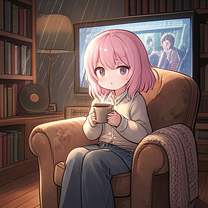
My First Month of German TV: It’s Weirder Than I Thought!
Okay, so here I am, three months into living in Berlin, and I’m finally tackling something I’ve been putting off – actually using my German beyond ordering coffee and asking for directions. And you know what? It’s terrifying. Specifically, talking about… television. I love watching TV, obviously, but the thought of explaining my viewing habits in German felt huge. It’s been a crash course in how different things are here, and honestly, a lot of it has been hilarious.
The Initial Horror: Asking for Recommendations
The first hurdle was pretty much everything. I wanted to ask a friend, Lena, who’s been here longer, for a recommendation. I’d seen this amazing German crime drama, Dark, and wanted to see if she’d heard of it. I built it up in my head – this smooth, confident conversation. What actually happened was… a disaster.
“Lena, du siehst du… Dark? Ist das gut?” (Lena, do you watch Dark? Is that good?) I asked, trying to sound casual.
She stared at me, completely bewildered. “Dark? Du meinst die Netflix-Serie? Ja, klar! Sehr gut!” (Dark? You mean the Netflix series? Yes, of course! Very good!)
I felt like an idiot. “Netflix?” I blurted out. In my head, I’d assumed everyone just watched German TV on… you know… German TV. The sheer number of streaming services is baffling. And the fact that Dark is on Netflix… it just highlighted how much things have changed. I learned my first vital German lesson: always clarify which streaming service you’re talking about. „Auf Netflix?“ (On Netflix?) became my new mantra.
Describing What I Watch
Then there’s just the vocabulary. “Schauen” (to watch) is okay, but it doesn’t cover everything. Last night, I was trying to explain to my colleague, Markus, what I’d been watching.
“Ich habe gestern Abend die Sendung geschaut.” (I watched the show last night.)
He raised an eyebrow. “Die Sendung? Was ist die Sendung?” (The show? What is the show?)
Apparently, “die Sendung” is super broad. I quickly realised I needed to be more specific. I started using phrases like: “Ich habe eine Serie geschaut” (I watched a series), “Ich habe einen Film gesehen” (I watched a film), and, crucially, “Ich habe einen Streaming-Film gesehen” (I watched a streaming film). It feels so much smoother, and thankfully, Markus understood!
Common German TV Phrases & Vocabulary
Here’s a little cheat sheet of phrases I’ve been picking up:
- Was schaust du gerade? (What are you watching right now?) – A really useful opener.
- Ich mag… (I like…) – followed by a genre, a show, etc. Ich mag Krimis (I like crime dramas).
- Es ist sehr spannend! (It’s very exciting!) – A classic reaction to a good show.
- Ich habe es abgeschaut. (I finished it.) – This literally means “I watched it through” but is used to say you finished a series.
- Ich habe es nicht verstanden. (I didn’t understand it.) – Don’t be afraid to admit you didn’t get something! It’s a relief to others that you’re struggling.
The Streaming Service Confusion – Seriously!
This is the biggest challenge, honestly. Everyone talks about Amazon Prime Video, Disney+, Netflix, JoyStream, ProSieben Fun (a local streaming service) – it’s a whole ecosystem! I quickly learned that just saying “Ich schaue Netflix” isn’t enough. You have to say „Ich schaue eine Serie auf Netflix“ or „Ich schaue einen Film auf Amazon Prime Video“. It’s become a constant battle against my own brain trying to simplify things. And don’t even get me started on the German names for the shows – often completely different from the English titles!
A Small Victory (and a slightly awkward moment)
Yesterday, I went to a Kino (cinema) with some friends. I wanted to ask about the streaming services they used. “Ihr schaut auch viel auf Disney+?” (Do you also watch a lot on Disney+) I asked. One of my friends, David, paused, looked confused, and then said, “Äh, Disney ist doch ein amerikanischer Konzern, oder?” (Uh, Disney is a US company, right?).
It was a brilliant, slightly uncomfortable reminder that cultural references and understanding of global companies can differ. I quickly explained that Disney+ had a lot of German-produced content too!
Moving Forward – Embrace the Confusion!
Looking back, this whole experience has been incredibly valuable. It’s forced me to slow down, to actually listen to how people talk, and to learn the nuances of German. Talking about television might seem small, but it’s a window into a different culture and way of thinking. And honestly, the confusion is kind of fun. I’m definitely going to keep using these phrases, keep asking questions, and keep getting a little bit lost in the world of German streaming. Viel Glück! (Good luck!) to me!


Leave a Reply