
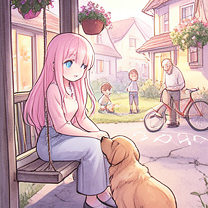
Building Bridges: Learning German Through My Neighborhood
Okay, so here I am, six months in Berlin. Six months of utter chaos, incredible coffee, and a slowly-building vocabulary. My German is…patchy. Really patchy. But I’m starting to feel like I can actually do things, and that’s huge. And right now, I’m focusing on something incredibly important: understanding my neighborhood, and more importantly, understanding the people who live here. It’s not just about directions; it’s about building connections. And that’s where the language really comes into play.
The First Encounter: Frau Schmidt and the Missing Schlüssel
The first hurdle was, predictably, the key. I’d locked myself out of my apartment – a classic newbie mistake. I rang the doorbell of Frau Schmidt, the older woman who lives next door. She’s always tending to her tiny balcony garden.
“Entschuldigung, Frau Schmidt! Ich habe meinen Schlüssel verloren!” (Excuse me, Mrs. Schmidt! I’ve lost my key!)
Her response was immediate, and surprisingly firm. “Ach, das ist ja toll! Wo haben Sie ihn denn verloren?” (Oh, that’s great! Where did you lose it?)
I panicked. My German was a jumble of “Ich…habe…verloren!” and a lot of frantic gesturing. She patiently explained, in slow, deliberate German, that I needed to describe where I last had it. I blurted out something about the park and the bench, completely butchering the past tense.
“Sie waren im Park auf der Bank,” she said, repeating it clearly. “Das ist gut. Wir können nachsehen.” (You were in the park on the bench. That’s good. We can look.)
It was a small thing, but it hammered home the point: simply stating what happened wasn’t enough. I needed to be precise. And, crucially, I needed to learn to say things correctly.
Everyday Conversations: Small Talk and ‘Nachbarn’
The word ‘Nachbarn’ (neighbors) keeps popping up. It’s so fundamental, and I’ve realized it’s more than just a word; it’s a whole social context. I started trying to use it, cautiously.
Yesterday, I was collecting my mail, and Herr Müller, the guy who runs the small corner shop, waved to me. I replied, “Guten Tag, Herr Müller! Wie geht es Ihnen?” (Good day, Mr. Müller! How are you?)
He responded, “Mir geht es gut, danke. Und Ihnen?” (I’m doing well, thank you. And you?)
I stumbled through a reply, “Mir geht es…okay. Ich bin neu hier.” (I’m doing…okay. I’m new here.)
He smiled and said, “Willkommen! Es ist gut, Nachbarn zu haben.” (Welcome! It’s good to have neighbors.) And suddenly, it felt…less intimidating. It felt like a genuine connection.
Useful Phrases for Neighborhood Life
Here’s a little list of phrases I’m trying to remember:
- “Entschuldigung, wissen Sie, wo…?” (Excuse me, do you know where…?) – Seriously useful for asking for directions, or for finding something.
- “Ich bin neu hier.” (I’m new here.) – Always good to say when starting conversations.
- “Wie geht es Ihnen?” (How are you?) – A basic greeting, and a polite way to start a conversation.
- “Es ist schön, Sie kennenzulernen.” (It’s nice to meet you.) – Said after a first encounter.
- “Vielen Dank für Ihre Hilfe!” (Thank you very much for your help!) – Always good to express gratitude.
Misunderstandings and Learning From Mistakes
I made a huge blunder last week. I was asking Frau Schmidt for advice about getting groceries. I told her, incredibly confidently, “Ich gehe zum Supermarkt, um Lebensmittel zu kaufen.” (I’m going to the supermarket to buy food.)
She stared at me, completely bewildered. She gently explained that “Lebensmittel” is very broad. I need to be more specific – “Obst und Gemüse” (fruit and vegetables), “Fleisch und Fisch” (meat and fish), etc. It was a humbling experience, and a good reminder to slow down and think about my word choice. She laughed, saying, “Ach, junge Leute! Manchmal sind die kleinen Dinge wichtig.” (Oh, young people! Sometimes the little things are important.)
Moving Forward: Building a Community
Learning German through my neighborhood isn’t just about vocabulary; it’s about developing a sense of place and belonging. It’s about understanding the rhythms of life here, and slowly, building relationships. I’m still making mistakes, still stumbling over words, but I’m practicing. I’m saying “Hallo” to people. I’m asking for directions. I’m trying to be a good ‘Nachbar’. And honestly, that’s the most rewarding part of my new life in Berlin. Ich glaube, ich lerne langsam. (I think I’m learning slowly.)


Leave a Reply