
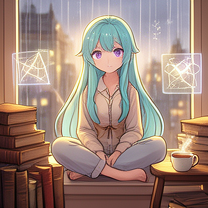
My German Journey: Talking About Learning, Forever
Okay, deep breath. Moving to Berlin was the biggest, scariest, most exhilarating thing I’ve ever done. I’d always dreamt of living somewhere different, somewhere… real. And Germany, with its history and its weirdly polite culture, felt like a good place to start that adventure. But let’s be honest, learning German hasn’t been a walk in the park. It’s been a messy, beautiful, frustrating, and incredibly rewarding process. And the thing that’s really struck me is how much people here talk about learning – not just in a formal way, but about lifelong learning, really.
The Initial Shock – And The Questions
The first few weeks were… intense. I’d walk into a Bäckerei (bakery) and just completely freeze. Ordering a Brötchen (bread roll) became an epic struggle. I kept saying things like, “Ich… ich möchte… ein… Brötchen?” and the poor woman behind the counter would just smile patiently. Finally, she gently corrected me, “Nein, nein! Sagen Sie: ‘Ich hätte gern ein Brötchen, bitte.’” (No, no! Say: ‘I would like a bread roll, please.’) It felt so small, but it was a huge moment. It wasn’t just about the word; it was about realizing how much I didn’t know.
I asked a colleague, Markus, about it. “Warum lernen Sie so viel Deutsch?” (Why are you learning so much German?) I asked, feeling a little embarrassed. He shrugged and said, “Es ist nicht einfach, verstehst du? Aber es ist wichtig. Ich lerne jeden Tag ein bisschen. Das ist Lebenslanges Lernen – lifelong learning. Es ist wie eine kleine Herausforderung, und es macht Spaß.” (It’s not easy, you understand? But it’s important. I learn a little bit every day. It’s lifelong learning – a small challenge, and it’s fun.)
Conversations About Learning – And My Own Attempts
That phrase, Lebenslanges Lernen, has stuck with me. I’ve started noticing it everywhere. At the Kaffeehaus (coffee house), I overheard two older men discussing a new online course on Italian history. “Es ist eine gute Möglichkeit, um sich weiterzubilden,” one of them said. (It’s a good way to continue learning.)
I’ve tried to use it myself, although it’s tricky. I told my landlord, Herr Schmidt, that I was taking a German language course. “Das ist gut! Sie sollten auch versuchen, Deutsch zu sprechen, so oft wie möglich.” (That’s good! You should also try to speak German as often as possible.) He seemed genuinely interested, and I realised I could actually talk about my learning process. I even practiced a little: “Ich lerne Deutsch, um mich besser im Leben zu fühlen. Ich möchte verstehen.” (I’m learning German to feel better in life. I want to understand.)
Little Mistakes, Big Lessons
There’s been a lot of miscommunication, obviously. The other day, I tried to order Obst (fruit) at the market and accidentally asked for “Obstgarten” (fruit orchard!). The vendor just laughed and said, “Ach, das ist ein Fehler!” (Oh, that’s a mistake!). It made me realize how important it is to be aware of my mistakes, and to not be afraid to laugh at them.
I’ve also learned that Germans are very direct. If I say something is difficult, they’ll say, “Das ist doch nicht schwer!” (That’s not difficult!). It’s a little harsh sometimes, but it pushes me to actually try harder.
Resources and Approaches – It’s Not Just Books
Markus suggested a few resources – Duolingo, of course, but also a local language exchange group. “Es ist wichtig, mit anderen Leuten zu sprechen,” he advised. (It’s important to speak with other people.) I’ve joined a group for beginners, and it’s terrifying and brilliant. Everyone is so supportive, and we’re all struggling with similar things. We’ve even started a little tradition: every week, we share one thing we learned – “Was ich heute gelernt habe” (What I learned today). It’s a small thing, but it really makes me feel like I’m part of a community.
The Bigger Picture – It’s About Growth
Honestly, talking to people like Markus and participating in these little groups has made me realize that “learning” isn’t just about grammar and vocabulary. It’s about growth, about being open to new experiences, and about embracing the challenges. It’s about constantly asking questions, making mistakes, and learning from them. It’s a mindset, really.
I still have a long way to go with my German. There are days when I feel completely overwhelmed. But the fact that I’m surrounded by people who value Lebenslanges Lernen – who see learning as a continuous journey – makes it all feel a little bit easier, a little bit more hopeful. And who knows, maybe one day, I’ll be confidently ordering a Schwarzwälder Kirschtorte (Black Forest Kirsch Cake) without a single hesitation. “Bitte, einen Sch ön!” (Please, one!)


Leave a Reply