
Writing formal letters in German used to feel really difficult for me. I
didn’t just struggle with vocabulary—I also found it hard to organize my
ideas and use the correct structure.
Things like:
–
Where do I start?
–
How formal should it sound?
–
Which grammar is correct?
Everything felt confusing at first.
That changed when I started practicing with a simple method: arranging
formal letters step by step (“Absatz ordnen”).
——————————
📄 Learning through a real formal letter
Instead of studying random sentences, I worked with one clear situation:
writing a formal letter to a company
For example:
–
asking for information
–
writing a complaint
–
requesting a response
Each exercise followed the same structure, which helped me understand how
formal German really works.
——————————
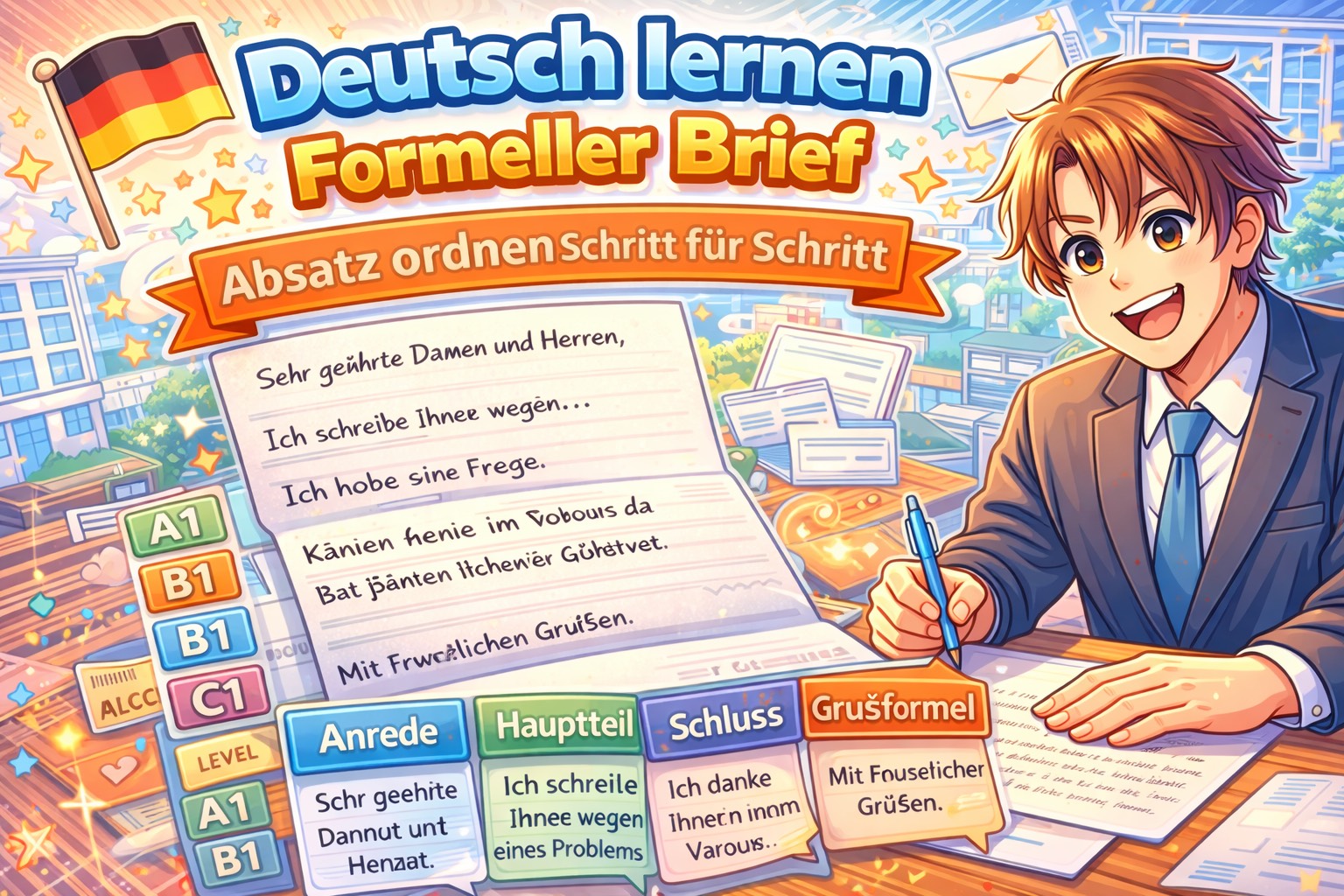
🧩 Understanding the structure
I learned that every formal letter follows a clear pattern:
1.
Anrede (Greeting)
Sehr geehrte Damen und Herren,
2.
Einleitung (Introduction)
Ich schreibe Ihnen wegen…
3.
Hauptteil (Main part)
Explanation, request, or complaint
4.
Schluss (Closing)
Ich danke Ihnen im Voraus.
5.
Grußformel (Ending)
Mit freundlichen Grüßen
By arranging these parts in the correct order, I started to understand the
logic behind formal writing.
——————————
📚 Grammar became easier
This method also helped me improve my grammar naturally:
–
Akkusativ:
Ich habe das Produkt gekauft
–
Dativ:
Ich schreibe Ihnen wegen eines Problems
–
Genitiv:
Die Qualität des Produkts ist schlecht
Instead of memorizing rules, I saw how they are used in real communication.
——————————
📈 From simple to advanced
What I really liked was the progression:
–
A1–A2: Very simple formal sentences
–
B1: Clear structure and requests
–
B2: Full complaint or inquiry letters
–
C1: Complex arguments with connectors like obwohl and dennoch
–
Advanced: Reflection and formal tone
Each level made me more confident.
——————————
💼 Real-life benefits
This practice is not just for learning—it’s useful in real life:
–
Writing emails to companies
–
Applying for jobs
–
Asking for information
–
Handling complaints
It gave me confidence to communicate in formal situations.
——————————
🎯 Why this method worked for me
–
It used real-world examples
–
It had a clear structure
–
It combined grammar and writing
–
It made learning more practical
——————————
🚀 Final thoughts
Learning to write formal German letters doesn’t have to be complicated. By
practicing with structured exercises and real contexts, I was able to
improve step by step.

Leave a Reply